Native Plants in Profile: Fothergilla gardenii
A shrub of quiet presence, rooted in water, light, and time
What is Fothergilla gardenii and where is it native?
Fothergilla gardenii, commonly known as dwarf fothergilla or witch alder, is a deciduous shrub native to the southeastern United States. It occurs primarily across the Atlantic and Gulf Coastal Plains—from North Carolina through South Carolina and Georgia, extending into the Florida Panhandle and Alabama.
In its natural habitat, it grows in moist, acidic soils within bog margins, pine savannas, and wet lowland systems—places where water, light, and soil chemistry are held in careful balance.
This is not a generalist shrub.
It is a plant shaped by very specific ecological conditions.
A plant that does not rush
Some plants arrive loudly—colour, height, immediate presence.
Fothergilla gardenii does something else entirely.
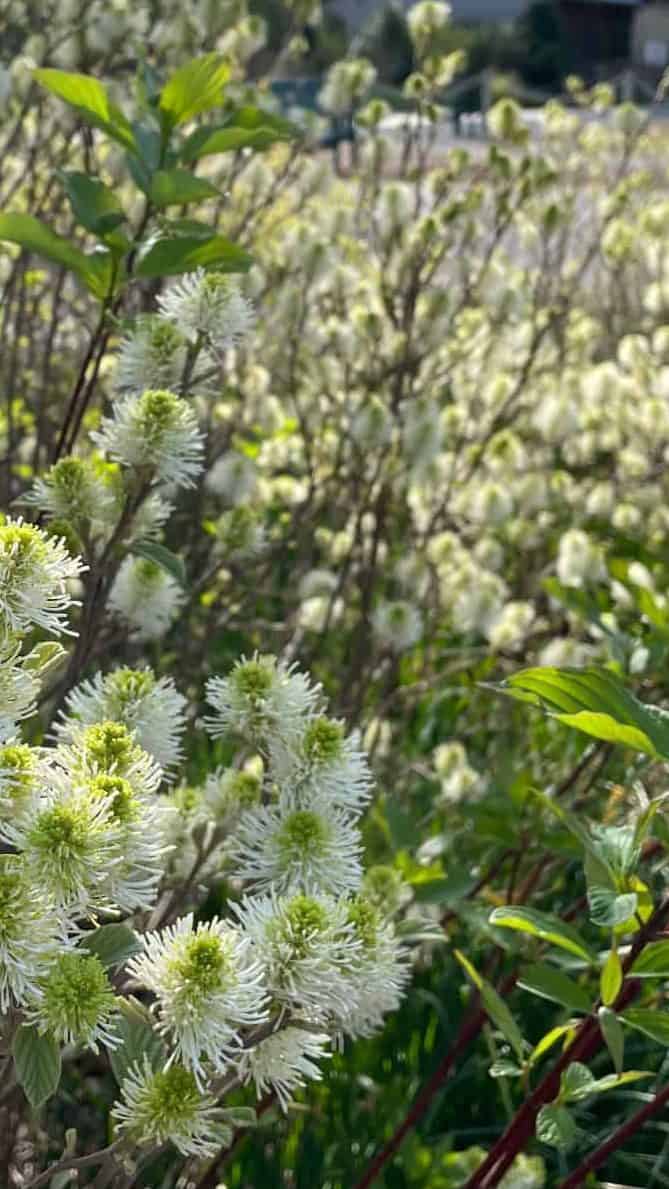
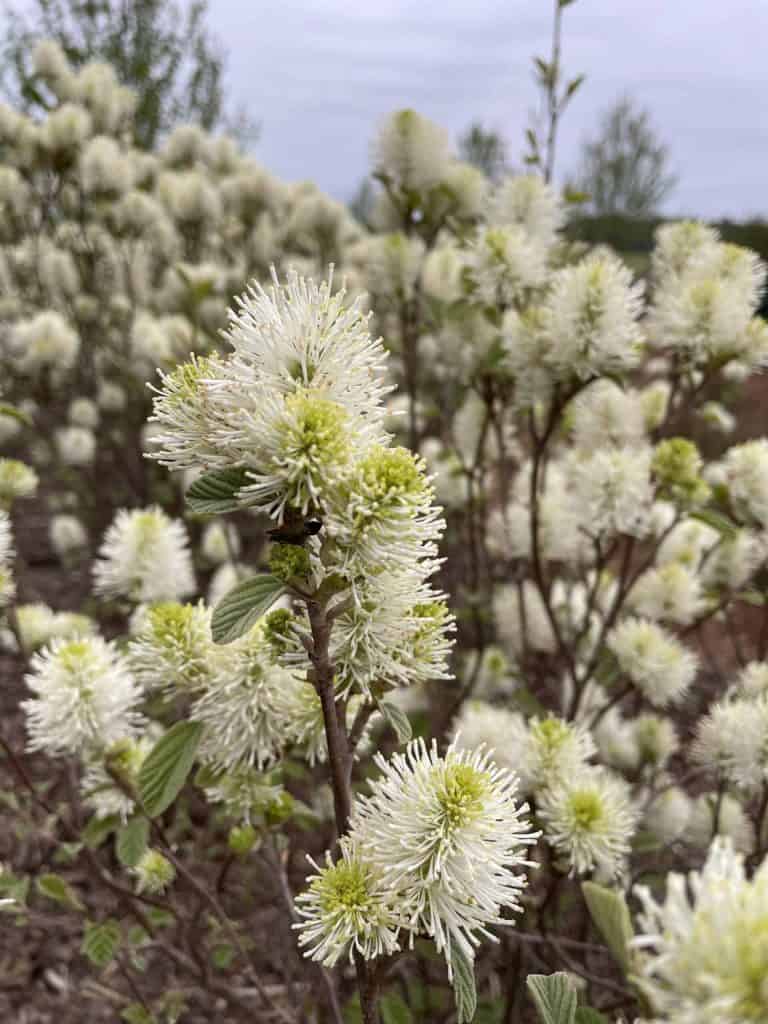
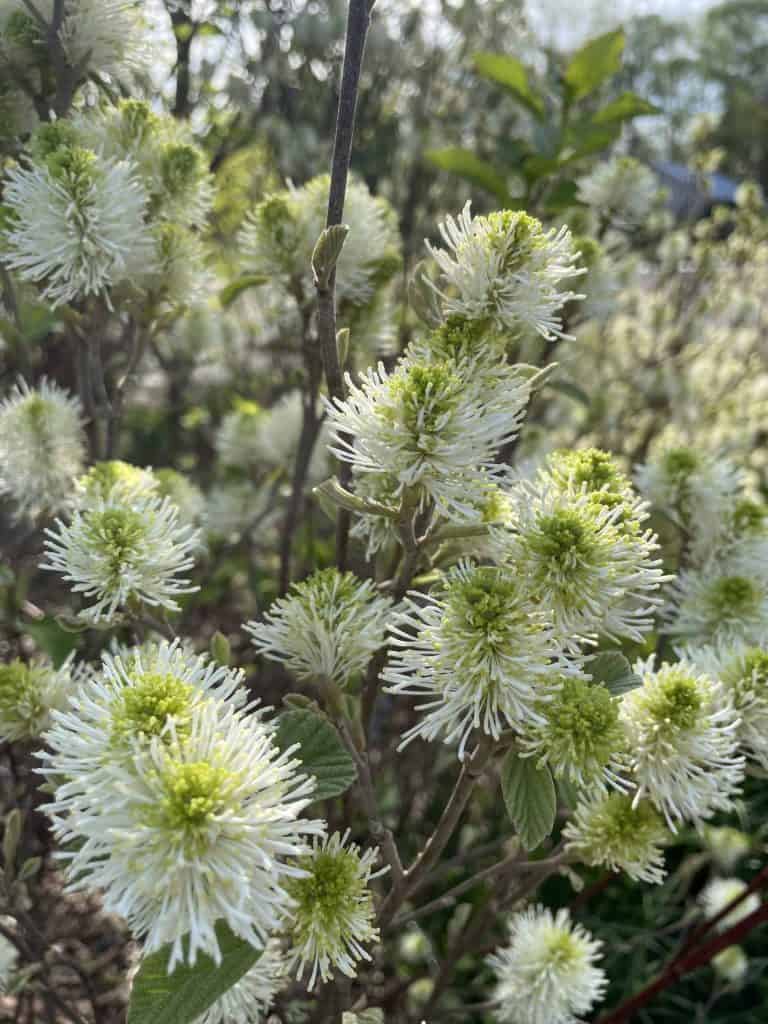
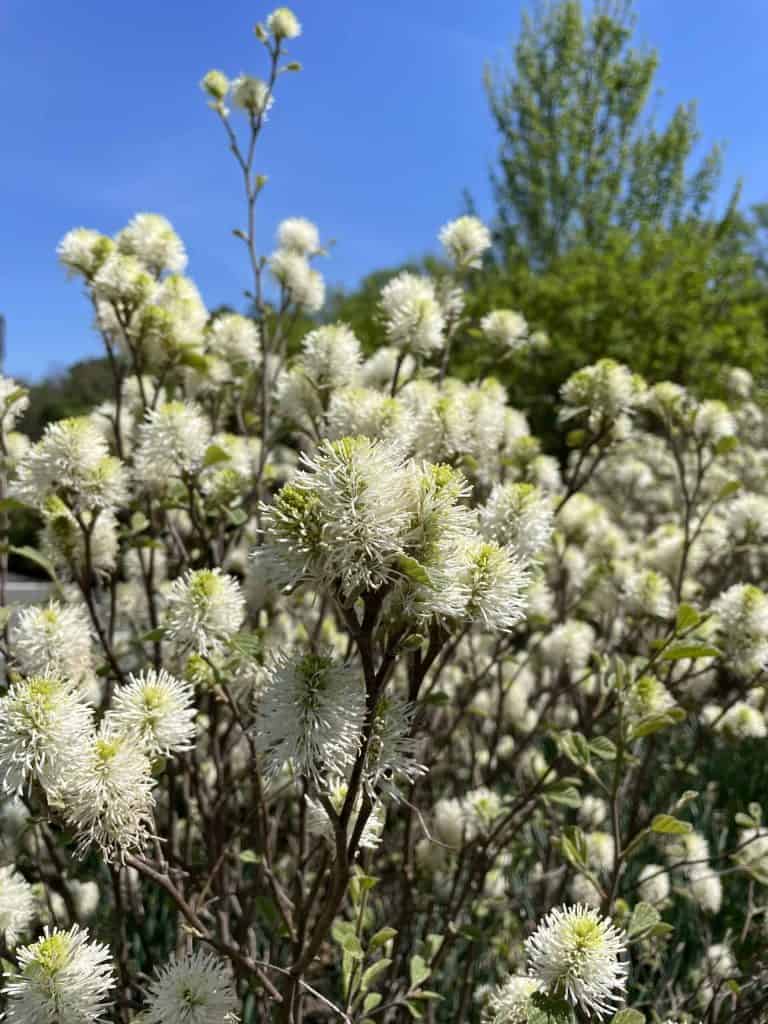
It emerges quietly in early spring—white, bottlebrush flowers appearing before the leaves, soft and weightless against still-bare branches.
Then it holds.
Through summer heat.
Through stillness.
And when the season begins to turn,
it becomes something else entirely—gold, orange, crimson.
Not sudden. But inevitable.
Native range — why precision matters
Understanding where a plant comes from is not a detail—it is the foundation.
Fothergilla gardenii belongs to:
- Coastal plain wetlands
- Pine savannas
- Peaty, acidic soils
- Bog and wetland edges
Its range is geographically narrow but ecologically deep.
This matters because when we remove a plant from its context, we often misunderstand what it truly needs to survive—let alone thrive.
Ecological role — subtle but important
In its native system, fothergilla is not dominant.
It exists within layered, moisture-balanced environments where:
- early-season flowers provide nectar for emerging pollinators
- its structure contributes to mid-layer vegetation
- it coexists within a wider wetland mosaic
It does not compete loudly. It participates quietly.
Botanical Profile – Native Plants in Profile: Fothergilla gardenii
Botanical Name: Fothergilla gardenii
Common Name: Coastal Witch Alder
Native Range: Coastal Witch Alder is native to the southeastern United States, primarily found in regions stretching from North Carolina to Louisiana. It thrives in the moist woodlands and along the edges of streams and swamps in this area.
Identifying – Fothergilla gardenii
Recognition begins with detail:
- Low, mounded shrub (typically 60–90 cm / 2–3 ft)
- White, fragrant, bottlebrush-like flowers (petal-less, composed of stamens)
- Blue-green rounded foliage in summer
- Exceptional autumn colour from yellow through deep red
The flowers are distinctive—soft, filament-like, almost luminous in early spring light.
Cultivars
Several cultivars of Fothergilla gardenii are available, each offering unique characteristics and benefits:
- ‘Blue Shadow’: Prized for its striking blue-green foliage, which contrasts beautifully with the typical green foliage of the species.
- ‘Mount Airy’: Known for its exceptional fall color display, producing vibrant hues of orange, red, and purple.
- ‘Suzanne’: Valued for its compact growth habit, making it ideal for smaller gardens or container planting.
Growing conditions — what it actually asks for
This is where most failures begin.
Fothergilla gardenii is often treated as a standard ornamental shrub. It is not.
It requires:
- Acidic soil (non-negotiable)
- Consistent moisture (without prolonged waterlogging)
- Organic, well-structured soil
- Full sun to partial shade
Soils should feel:
- light
- open
- biologically active
Heavy, compacted, or alkaline soils will slowly work against it.
Propagation and patience
This is not a plant built for speed.
Propagation methods include:
- Layering (most reliable)
- Semi-hardwood cuttings
- Seed (slow, irregular, often requiring seasonal cycles)
Establishment takes time.
And that is not a flaw—it is part of its nature.
Where people go wrong
The pattern is consistent:
- Planting in alkaline soils
- Assuming drought tolerance
- Ignoring moisture balance
- Forcing it into rigid, ornamental schemes
- Expecting fast growth
This is a plant that settles slowly. And resists being rushed.
Growing Native Plants in Profile: Fothergilla gardenii in Europe and Poland
A note on place, adaptation, and responsibility – Fothergilla gardenii is not native to Europe.
It originates from a very specific ecological system—warm, humid, acidic coastal plains.
It can be grown successfully in parts of Europe, including Poland—but only when its conditions are understood and respected.
Can it grow well here?
Yes—particularly well where:
- soils are naturally acidic or amended
- moisture is consistent
- extremes of drought are avoided
Success depends less on climate, and more on soil chemistry and structure.
Ecological honesty
Outside its native range, this plant changes role.
It no longer supports the same specialist relationships.
It becomes an ornamental with ecological character, rather than a fully functional native species.
That distinction matters.
European alternatives for ecological planting
If your goal is true ecological integration, consider species better aligned with European systems:
Structural wetland and edge shrubs
- Frangula alnus (alder buckthorn)
- Myrica gale (bog myrtle)
- Salix cinerea,
- Salix aurita (native willows)
- Viburnum opulus,
- Viburnum lantana
Acid-loving shrubs and subshrubs
- Calluna vulgaris (heather)
- Erica tetralix (cross-leaved heath)
- Vaccinium myrtillus,
- Vaccinium vitis-idaea
- Andromeda polifolia
Soft-textured perennials for similar visual layering
- Filipendula ulmaria
- Thalictrum aquilegiifolium
- Geum rivale
- Pulsatilla vulgaris
These plants do more than resemble the aesthetic—they belong.
Care and Maintenance
- Pruning: Minimal pruning is required, primarily to remove dead or damaged branches. Prune immediately after flowering to maintain the shrub’s natural shape.
- Fertilization: Apply a balanced, slow-release fertilizer in early spring to provide essential nutrients for vigorous growth and abundant flowering.
- Mulching: Apply a layer of organic mulch — such as shredded bark, pine straw, or compost — around the base to retain moisture, suppress weeds, and insulate the roots.
- Watering: Provide regular watering during periods of drought or high temperatures to keep the soil consistently moist but not waterlogged.
A more grounded perspective
To grow Fothergilla gardenii well, you must understand where it comes from.
Not just geographically—but ecologically.
Because it is not asking for attention. It is asking for the right conditions.
Closing reflection
This is not a plant that dominates.
It waits. It settles. It reveals itself slowly. And in doing so, it reminds us—that not all beauty arrives quickly.
Some of it unfolds over seasons, quietly, until one day you realise it was always there.
Credit and Photos: Delaware Botanic Gardens — Stephen Pryce Lea