
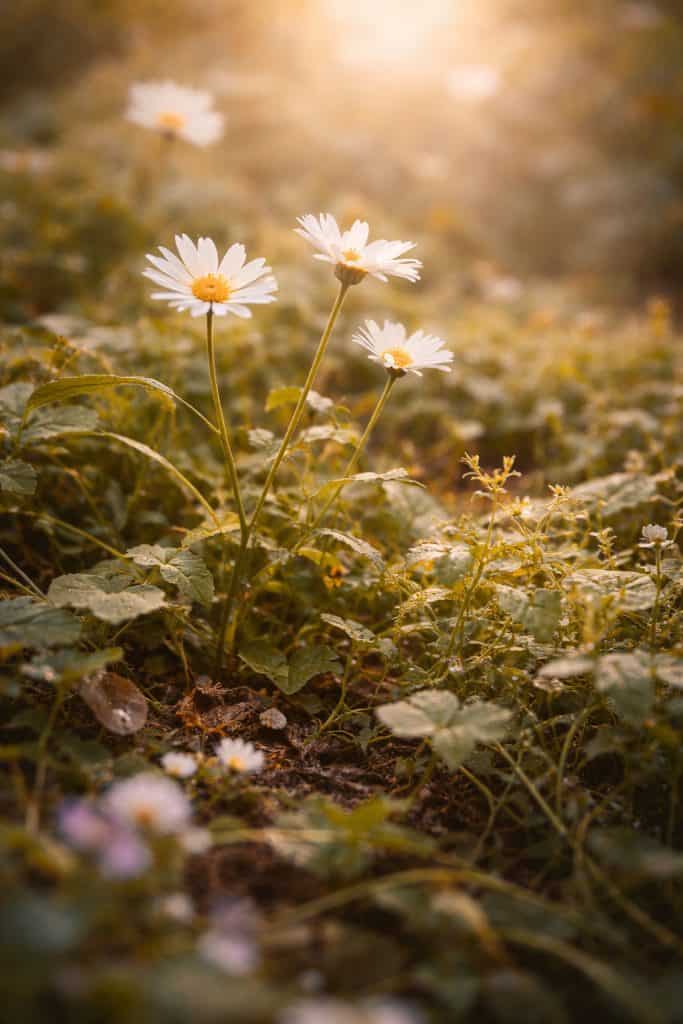
What does it mean for a plant to belong in a landscape?
A plant belongs when it is naturally suited to the soil, climate, and ecological relationships of a place. Native plants develop over time within these conditions, forming connections with other species that support long-term resilience and biodiversity.
The conversation shifts.
Once we begin to observe a garden rather than control it, something else becomes visible — certain plants appear again and again, without invitation.
They establish themselves quietly.
Persist through seasons.
Return even when disturbed.
These plants are not random.
They belong.
Native plants are often introduced as a solution — a list to follow, a rule to apply. But they are better understood as something else entirely.
They are expressions of place.
Each species carries the memory of the land it evolved within — its climate, its soils, its rhythms of disturbance and recovery. Together, they form relationships that extend far beyond the visible garden.
To work with native plants is not simply to plant them. It is to begin listening to what belongs.
Why This Matters
In a time where planting is often guided by availability rather than suitability, the idea of belonging becomes more important.
Plants are moved, selected, and introduced as ornamentals without always considering the conditions they are entering.
And over time, this creates landscapes that require more input to sustain them.
What to Observe
Belonging is already visible—if we know where to look.
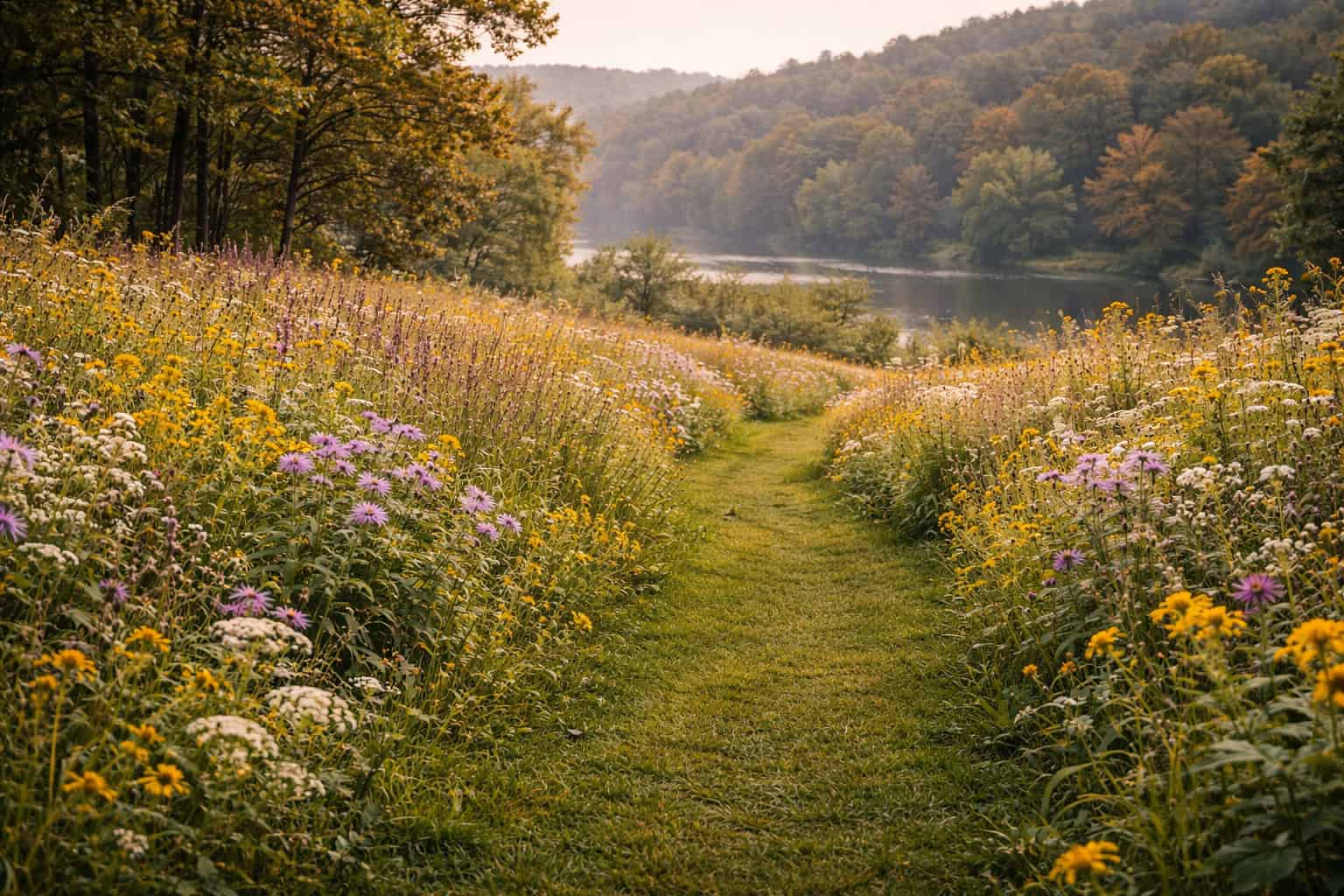
Before selecting plants, observe how belonging already expresses itself in the landscape.
Look for repetition—species that appear across different areas, in similar conditions.
Notice how they respond to light, soil, and moisture, and how they interact with other plants around them.
These relationships form the structure of the landscape, revealing what is able to persist over time.
Existing Plant Communities
Notice which plants appear naturally in nearby fields, roadsides, woodland edges, and disturbed ground.
These are the clearest indicators of what the wider landscape supports.
Plant Associations
Plants rarely grow alone.
Certain species consistently appear together — grasses with wildflowers, shrubs with ground layers, trees with understory plants.
These associations reveal ecological relationships.
Pollinators and Wildlife
Observe which plants attract insects, birds, and other wildlife.
These interactions often indicate deeper ecological connections between species.
Disturbance Patterns
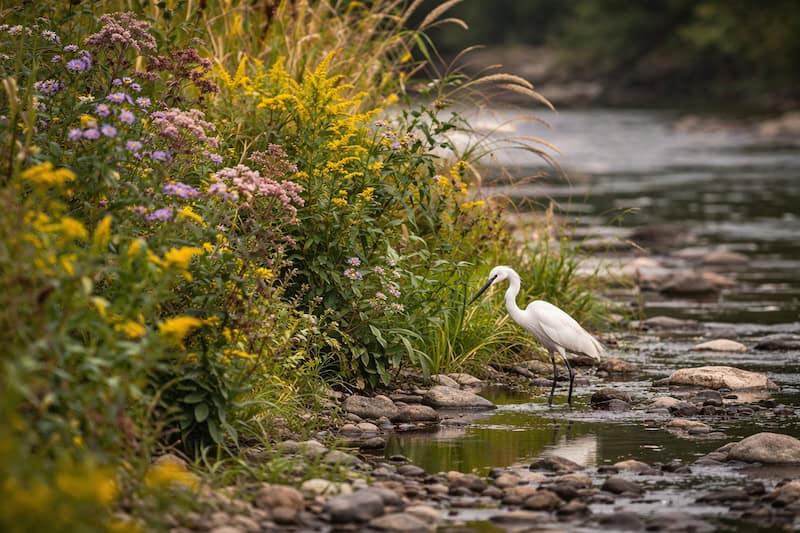
Some plants thrive in areas that are frequently disturbed — paths, edges, cultivated ground.
Others establish in stable, undisturbed soils.
Understanding this helps determine where different plants belong.
Belonging, in this sense, is not aesthetic. It is functional.
What It Means
Native plants are not simply local species.
Native plants do not exist in isolation.
They form relationships with soil organisms, pollinators, fungi, and surrounding plant communities—creating systems that are more stable and self-supporting over time.
They are participants in an ecological network.
Over time, they have adapted to local climate conditions, soil composition, seasonal cycles, and relationships with insects, fungi, and animals.
When these plants grow together, they form systems that are more resilient, more balanced, and more capable of sustaining life.
Introducing native plants into a garden is not about replicating wildness.
It is about reconnecting fragmented pieces of a larger system.
Belonging Is Not Placement
A plant can be placed anywhere.
But it will only belong where conditions allow it to function without constant support.
This distinction changes how decisions are made.
From selection…to recognition.
How to Respond
The response here is not selection—but alignment.
Once we begin to understand belonging, plant selection becomes more intentional.
Choose species that match existing site conditions.
Work with plant communities rather than isolated specimens.
Allow plants to establish relationships over time.
Avoid forcing species into conditions they are not suited for.
Rather than asking, “What do I want to plant here?” the question becomes:
“What already belongs here, and how can I support it?”
Seasonal Notes
Belonging reveals itself differently throughout the year.
Spring
Native plants emerge in response to soil temperature and light. Early bloomers often support the first pollinators.
Summer
Growth patterns show which plants are well adapted to heat and moisture conditions.
Autumn
Seed production reveals how plants sustain themselves and spread through the landscape.
Winter
Structure remains. Seedheads, stems, and grasses provide habitat and protection for wildlife.
Each season reveals a different aspect of belonging—not as separate events, but as part of a continuous cycle.
A Simple Way to Begin
Look beyond your garden.
Notice what grows without care in nearby spaces.
Start there—not with what you want, but with what already works.
Walk beyond your garden.
Observe nearby natural and semi-natural spaces.
Notice which plants return each year without intervention.
Identify patterns of association between species.
Resist the urge to immediately introduce new plants.
Instead, begin by understanding what is already present.
Belonging cannot be designed. It can only be recognised and supported.
Belonging is not aesthetic.
It is functional.
Transition
As we begin to recognise belonging, another question emerges.
If these systems already exist,
how much intervention is actually needed?
And the answer is often less than we expect.
This leads to the next step:
restraint.