
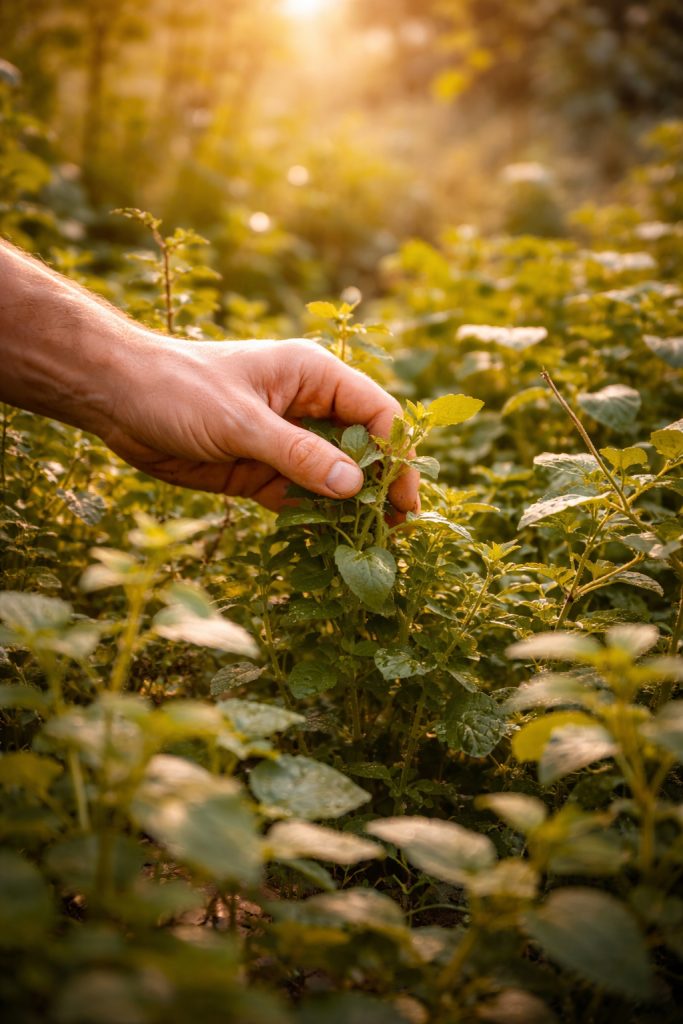
What is the difference between garden care and control?
Garden care works with natural processes—supporting soil, plants, and seasonal rhythms so they can function as a living system. Control, by contrast, attempts to override those processes, often leading to higher maintenance, weaker plants, and long-term instability.
At first glance, garden care and control can look the same.
Both involve attention.
Both require action.
Both shape the appearance of a garden.
Beds are maintained. Plants are pruned. Edges are defined.
And yet, beneath these similarities lies a fundamental difference.
Garden care and control begins with certainty.
It assumes the garden must conform to a vision — that order is defined in advance, that deviation is a problem to be corrected.
Care begins with attention.
It asks what is happening here, and why. It observes before acting. It allows the garden to reveal its patterns before imposing structure.
The distinction is not in what we do. It is in how we see.
Care and Control are Not the Same
Care listens first, then responds.
Control decides first, then imposes.
Care works with conditions.
Control attempts to override them.
One builds resilience over time.
The other often creates dependency.
What to Observe
The difference between care and control becomes visible in moments of tension.
Response to the Unexpected
A plant appears where it was not intended.
Control removes it immediately.
Care pauses.
Why has it established here? What conditions has it responded to?
Edges and Boundaries
A border begins to soften and blur.
Control restores the line.
Care observes the transition.
Is this movement creating habitat? Is it stabilising the space?
Variation in Growth
Some plants thrive while others struggle.
Control attempts to correct the imbalance quickly.
Care studies it.
What conditions are favouring one over the other?
Signs of Disorder
What appears untidy may be functioning.
Seedheads, leaf litter, and irregular growth patterns often support life beneath the surface.
Over time, control creates dependency. Care creates resilience.
What It Means
Control prioritises appearance.
It values uniformity, predictability, and immediate results. It often leads to increased intervention — more pruning, more feeding, more correction.
Care prioritises function.
It recognises that variation is part of a healthy ecosystem. It allows processes to unfold, even when they do not align with a fixed vision.
The garden requires constant input to maintain its form under control.
Under care, the garden begins to sustain itself.
How to Respond
Shifting from control to care requires a change in posture.
Pause before acting.
Observe patterns before correcting them.
Intervene only where necessary.
Allow natural processes to continue where they support the system.
Accept that not all outcomes can be predicted or managed.
This does not mean doing nothing. It means acting with intention.
Seasonal Notes
The distinction between care and control becomes clearer across the seasons.
Spring
The urge to tidy and organise is strongest. Care suggests patience.
Summer
Growth can feel excessive. Care asks whether intervention is needed or simply desired.
Autumn
Completion invites clearing. Care recognises the value of leaving structure in place.
Winter
Stillness exposes the underlying framework of the garden — revealing where intervention has supported or disrupted balance.
Field Practice
Choose a moment where you feel the urge to act.
Pause.
Ask: Is this necessary for the health of the system? Or is it an attempt to impose order?
Observe what happens if you delay action.
Record the outcome.
Over time, this practice reveals the difference between intervention that supports life and intervention that interrupts it.
Transition
Having moved through observation, soil, belonging, restraint, relationship, specificity, and completion, we arrive at a quieter understanding.
The garden is not something we finish.
It is something we return to.
The same place, seen again under different light, different growth, different conditions.
And in that return, something changes — not only in the garden, but in how we perceive it.
This brings us to the final movement:
Walking the same path in a new season.