
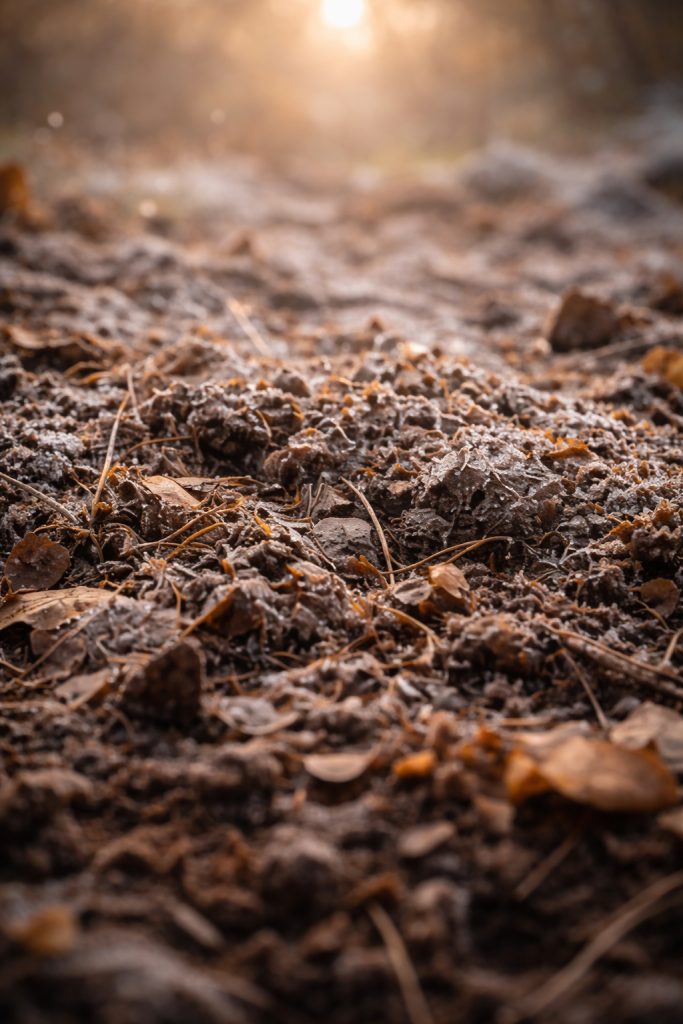
What happens to soil in winter?
Soil remains active through winter. Microorganisms continue breaking down organic matter, moisture reshapes structure, and frost helps loosen compacted ground—preparing the soil for future growth even when the surface appears still.
Why This Matters
In a culture that focuses on visible growth, winter is often misunderstood.
But the health of a garden is not determined in its most active season— it is shaped in the quiet ones.
To many, it appears as a pause — a dormant season when growth stops and life retreats beneath frost and snow. Beds look quiet. Stems stand dry and skeletal. The soil seems still.
Yet winter is not inactivity. It is a season of hidden work.
Beneath the surface, soil organisms continue their slow labour. Moisture moves through the ground, reshaping structure. Frost loosens compacted earth. Organic matter breaks down, releasing nutrients that will support the next cycle of growth.
Winter reminds us that the most important processes in a garden are often invisible.
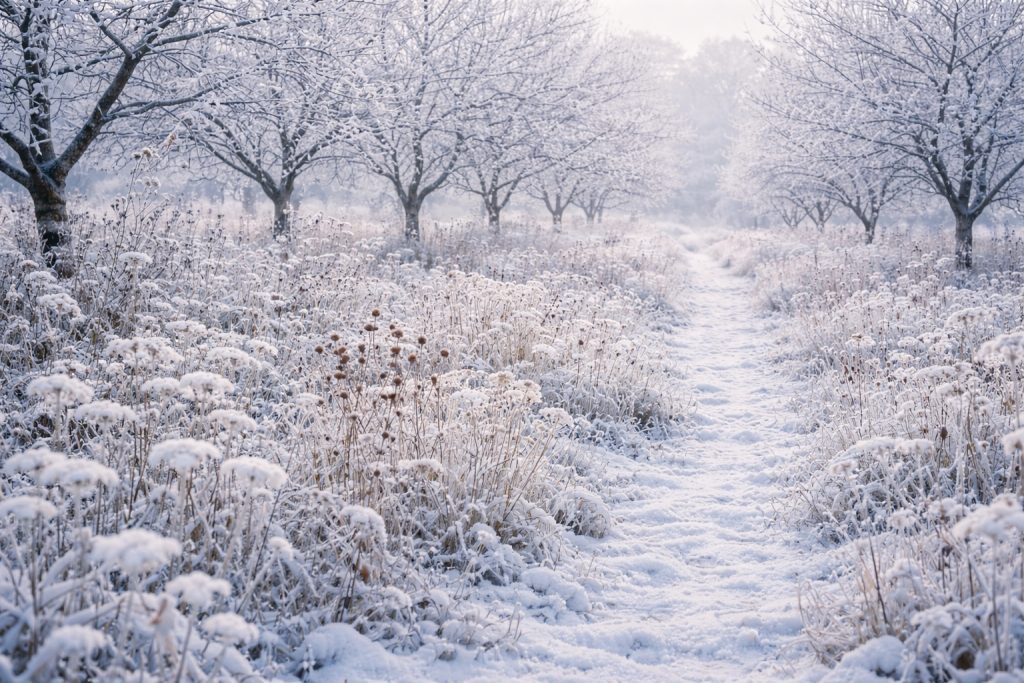
What to Observe
These observations are often easiest in winter—when growth recedes and the structure beneath becomes visible.
Winter offers a rare opportunity to see soil clearly, without the distraction of foliage and flowers.
Soil Structure
Where the soil is healthy, winter rain and frost create a loose, crumbly texture. Earthworms remain active in milder periods, leaving casts that enrich the surface.
Water Movement
Winter reveals drainage patterns that summer growth often hides. Puddles, runoff paths, and damp areas indicate how water moves through the land.
Organic Matter
Leaf litter, fallen stems, and decomposing plant material gradually return nutrients to the soil. These layers protect microbial life while feeding the system.
Bare Ground
Areas where soil lies exposed are more vulnerable to erosion and nutrient loss. Winter winds and rain can strip away the very structure plants depend on.
The stillness of winter is therefore not emptiness — it is preparation.
What Winter Reveals That Summer Hides
In full growth, the garden conceals its weaknesses.
Roots are hidden. Water patterns masked. Soil structure protected by foliage.
Winter removes that layer.
What remains is the foundation—clearer, and easier to understand.
Supporting the Soil Through Winter
The role of the gardener in winter is not to improve the soil, but to protect what is already happening.
Organic matter left in place becomes part of the system.
Surface cover reduces erosion and stabilises moisture.
Disturbance is minimised, allowing structure to rebuild naturally.
These are not techniques.
They are acts of restraint.
What It Means
Healthy soil is not inert material. It is a living system.
Fungi form networks that connect plant roots. Bacteria break down organic matter into usable nutrients. Insects, worms, and microorganisms create channels that allow water and air to move through the ground.
Winter strengthens this system by slowing it.
Cold temperatures reduce rapid growth above ground, allowing biological processes below ground to stabilise and rebalance. Nutrients accumulate gradually rather than being consumed immediately.
A Simple Way to Begin
Choose one small area.
Leave it undisturbed through winter.
Observe how it changes—in structure, moisture, and life beneath the surface.
How to Respond
Winter encourages restraint.
Rather than disturbing soil unnecessarily, gardeners can support its natural processes by protecting the surface and allowing life below to continue undisturbed.
Leave leaf litter where possible.
Allow plant stems and seedheads to remain standing through the coldest months.
Avoid digging wet soil, which can collapse delicate structure and compact microbial habitats.
In some situations, a light organic mulch may help protect exposed ground while adding nutrients as it decomposes.
The goal is not intervention, but protection.
Seasonal Notes
Winter provides the clearest picture of how soil behaves under stress.
Heavy rain reveals drainage challenges.
Frost highlights areas prone to compaction.
Wind exposes where organic matter is needed to stabilise surface layers.
These observations become invaluable when planning spring work.
In colder climates, frost plays a greater role in shaping soil.
In milder regions, moisture and microbial activity remain more consistent.
The conditions differ.
The process remains.
Winter does not stop the garden.
It reveals it.
Beneath the stillness, structure is rebuilt, nutrients are returned, and balance is restored.
And from that foundation, everything that follows becomes possible.
Field Practice
Choose a small area of the garden and gently examine the soil.
Notice its texture between your fingers.
Look for earthworms or small channels beneath the surface.
Observe whether water drains quickly or lingers.
If possible, compare two different locations — perhaps one under tree cover and another in open ground.
The differences will tell you more about the site than any soil test alone.
Transition
Once we begin to understand soil as a living system, another question naturally emerges.
If soil provides the foundation, how do plants themselves express belonging within that structure?
Some species adapt easily to many environments. Others seem deeply tied to particular landscapes.
This brings us to the idea of native plants — not as rigid rules, but as interpreters of place.