Canadian Goldenrod: History, Significance, and Uses
A keystone plant with many names, many places, and one shared role
What is goldenrod and why is it important?
Goldenrod (Solidago spp.) is a group of flowering plants, most native to North America, with some species native to Europe and Asia. It is considered a keystone plant for pollinators, supporting dozens of specialist bees and over 100 species of insects. In some regions, however, introduced goldenrod species have become invasive and require careful management.
Native range — understanding goldenrod globally
This is where clarity matters.
North America (primary center of diversity)
Most Solidago species originate here—
across prairies, savannas, meadows, and forest edges.
Examples include:
Solidago canadensis — Canada goldenrod
Solidago rigida — stiff goldenrod
Solidago nemoralis — gray goldenrod
These species are deeply embedded in ecological systems—supporting specialist pollinators and complex food webs.
Europe and Eurasia (native species)
Europe is not without goldenrod.
The key native species is: Solidago virgaurea
This species is:
Widespread across Europe, from the British Isles to Scandinavia and into Asia
Found in woodland edges, meadows, and upland habitats
It behaves differently: Less dominant, more integrated into plant communities, ecologically balanced within its range.
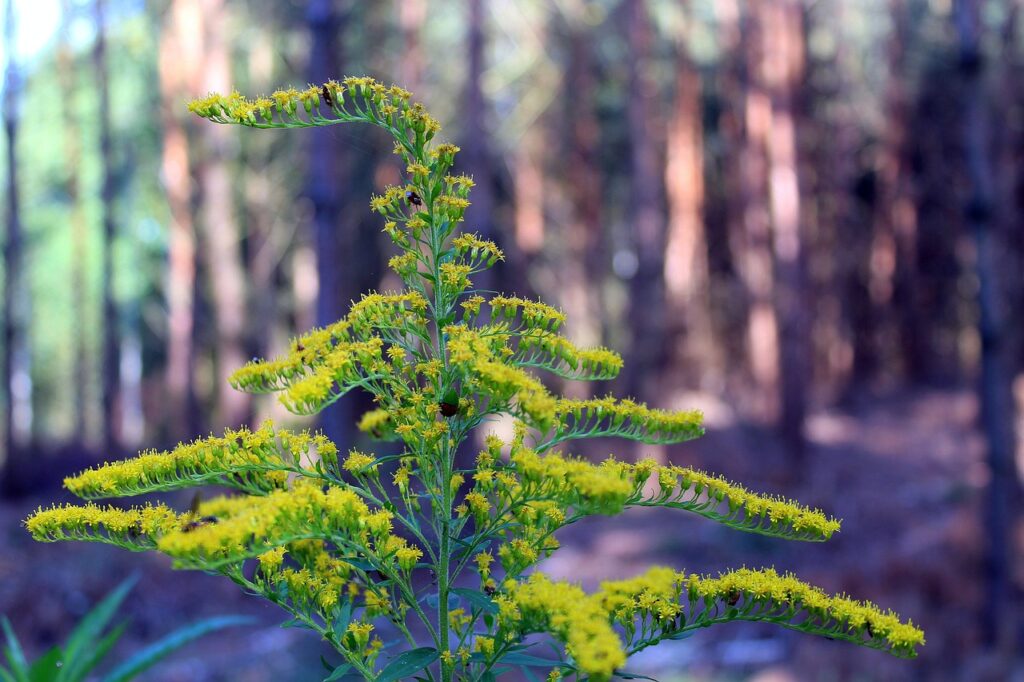
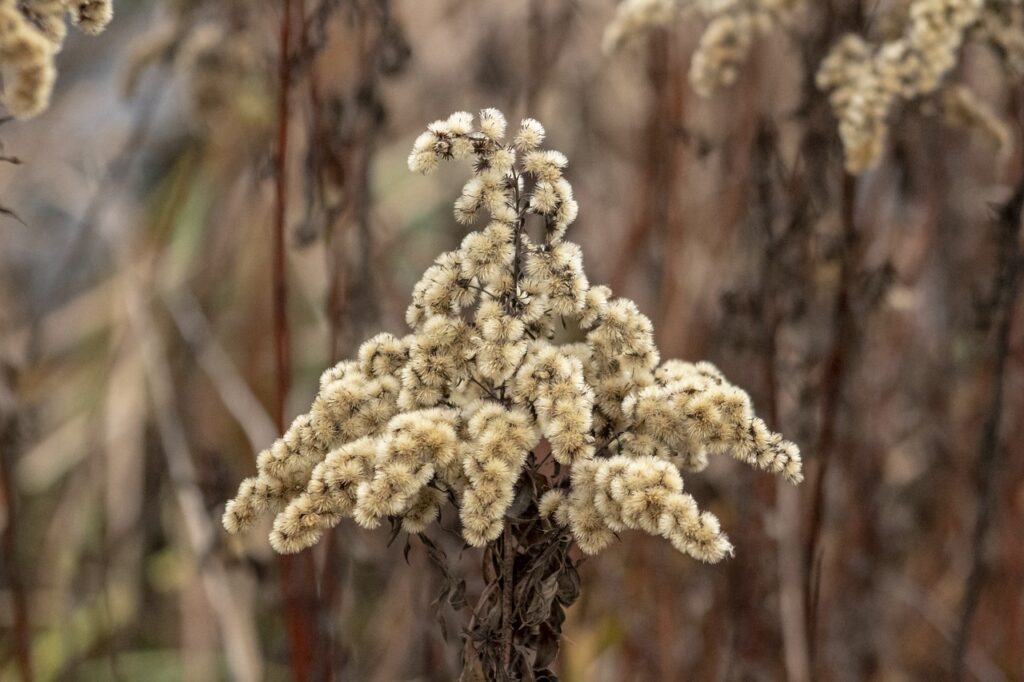
As autumn approaches, the landscape comes alive with the brilliant golden hues of goldenrod (Solidago), a hardy perennial herbaceous plant from the Aster family. One of the most well-known species, Canadian goldenrod (Solidago canadensis), is native to North America and is easily identified by its tall, slender stems crowned with vibrant yellow flower clusters. This resilient plant has played a crucial role in the continent’s ecosystems for centuries, while also offering a wealth of historical uses.
Botanical Overview
- Family: Asteraceae (Aster family)
- Type: Perennial herbaceous plant
- Native Range: North America, primarily Canada and the United States
- Height: Typically 3–6 feet (90–180 cm)
- Flowering Period: Late summer to early fall
- Flowers: Bright yellow, small, densely packed in plume-like clusters at the tops of tall, slender stems
- Leaves: Lance-shaped, alternate along the stem, with serrated edges
- Habitat: Meadows, prairies, roadsides, and disturbed areas with full sun or partial shade
- Uses: Traditional medicine, dye production, and erosion control in restoration projects
Why goldenrod is a keystone species
In its native range, goldenrod is not just present—it is essential.
It flowers late in the season, when many other plants have faded. It provides nectar and pollen at a critical time for insects preparing for winter.
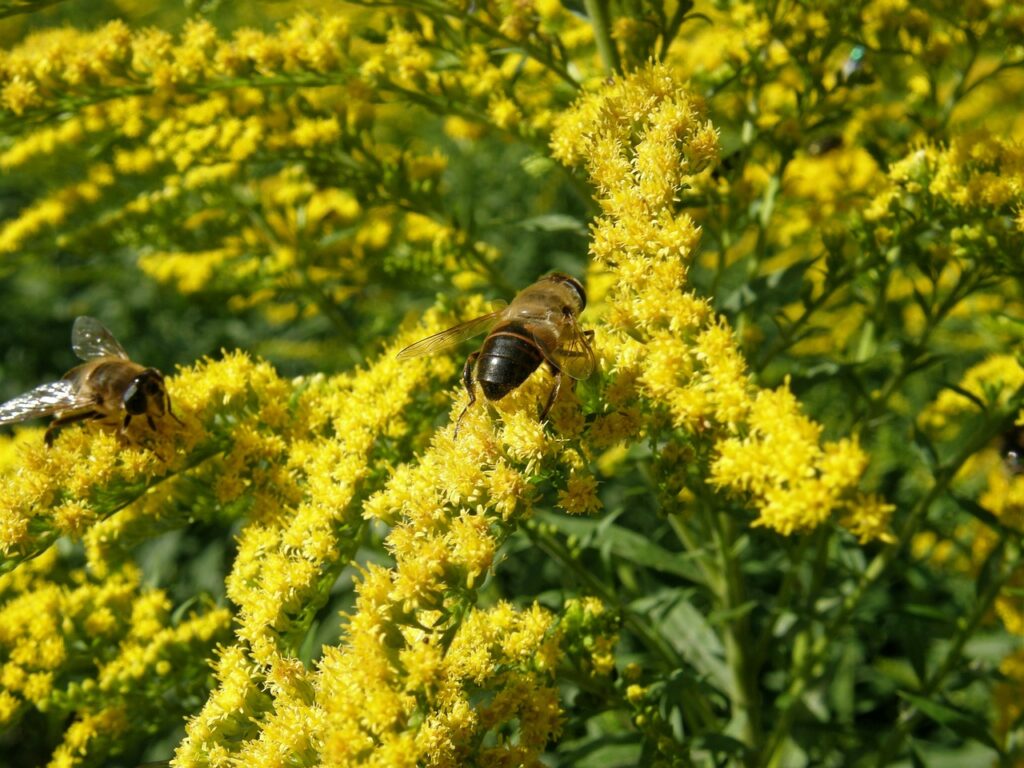
It supports: Dozens of specialist bee species, over 100 insect species
Birds that feed on those insects
It is often described as one of the most important plants for pollinator biodiversity in North America.
This is what “keystone” means:
Remove it—and the system weakens.
Historical Significance
Historically, Canadian goldenrod has played an important role in various cultures, particularly among Native American tribes. The plant was used in traditional medicine for its anti-inflammatory, diuretic, and antiseptic properties — employed to treat wounds, sore throats, fevers, and kidney problems. It was also used in rituals and as a dye, producing a rich yellow colour.
During the American Revolution, Canadian goldenrod became a symbol of resistance. After the Boston Tea Party, when British tea became scarce, American colonists turned to “Liberty Tea” — a herbal substitute made from goldenrod leaves, brewed as an act of defiance against British rule.
Uses and Benefits
Canadian goldenrod is valued for its medicinal properties, still recognized in modern herbalism. The plant contains saponins, flavonoids, and tannins, which contribute to its diuretic, anti-inflammatory, and antioxidant effects. It is commonly used to support urinary tract health, reduce inflammation, and alleviate allergy symptoms.
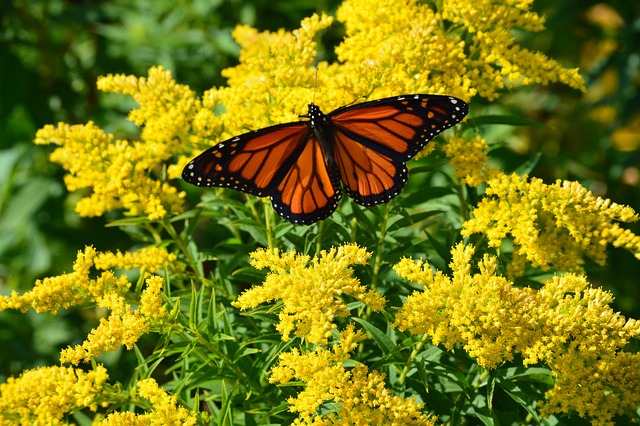
In addition to its medicinal uses, Canadian goldenrod has significant ecological benefits. It is a key species in native plant gardens and restoration projects, supporting a wide variety of pollinators — including bees, butterflies, and other beneficial insects. Its late-season blooms provide a crucial nectar source for pollinators preparing for winter.
Role in Biodiversity
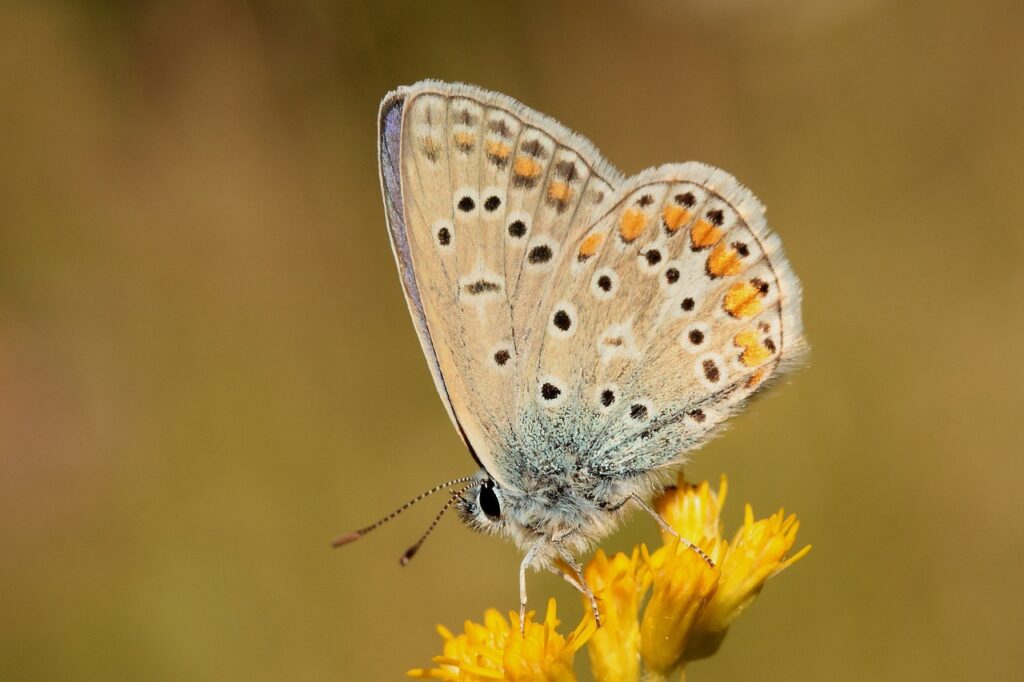
Canadian goldenrod is a keystone species in many ecosystems. Its dense, nectar-rich flowers attract honeybees, native bees, butterflies, and wasps. These insects in turn support bird populations by providing a food source during late summer and early fall.
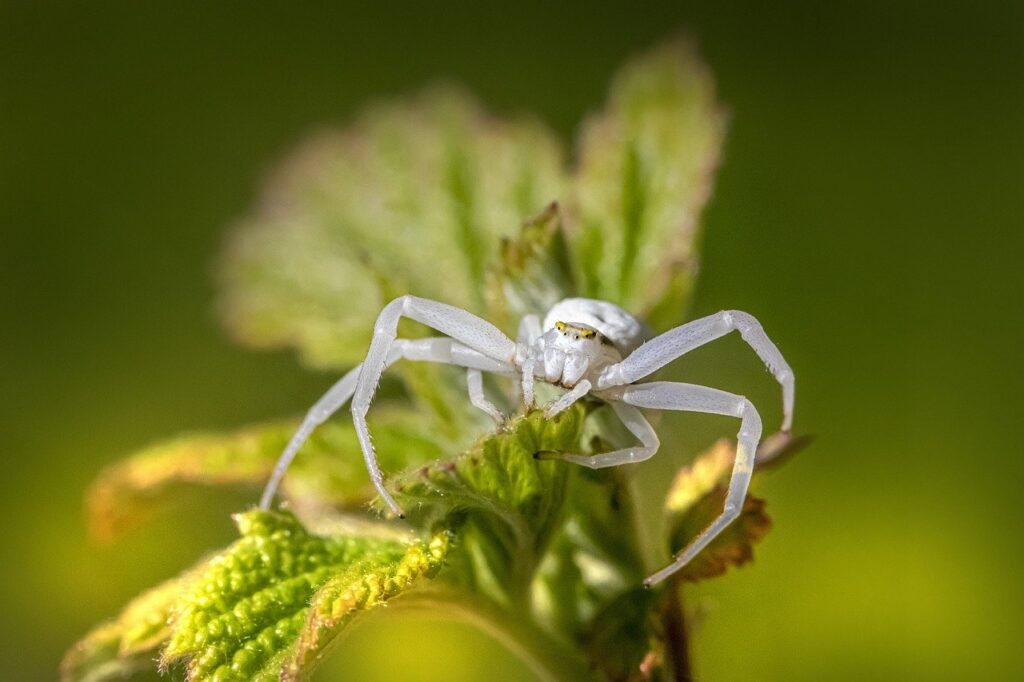
The plant also serves as a host for several species of caterpillars, including those of the goldenrod gall fly (Eurosta solidaginis) and the goldenrod crab spider (Misumena vatia), which depend on it for food and shelter. Goldenrod is also a crucial part of the diet for some grazing animals, such as deer and rabbits.
Habitat Role
Canadian goldenrod thrives in prairies, meadows, open woodlands, and along roadsides. It is particularly well-suited to poor, well-drained soils and full sun, although it can tolerate partial shade. The plant’s adaptability allows it to colonize disturbed areas, often being one of the first species to appear in succession — thereby paving the way for other plants to establish. Its extensive root system also stabilizes soil and prevents erosion, making it an excellent choice for conservation and restoration projects.
Invasiveness and Control
While Canadian goldenrod is native to North America, it has become invasive in some parts of Europe and Asia, where it was introduced as an ornamental plant. In these regions, it can outcompete local flora, leading to reduced biodiversity. Control methods include mowing, regular cut-back and root removal, solarizing, and heavy mulching.
After the Boston Tea Party, American colonists brewed goldenrod as “Liberty Tea” — an act of defiance that cemented this native plant’s place in history.
In Conclusion
Canadian Goldenrod History and Uses is a plant of significant historical, medicinal, and ecological value. Its vibrant yellow flowers not only add beauty to natural landscapes but also provide essential resources for pollinators and other wildlife. As a native plant, it plays a crucial role in maintaining biodiversity and supporting healthy ecosystems across its range. Despite its invasiveness in some areas outside North America, it remains a cherished and beneficial species in its native habitat.