
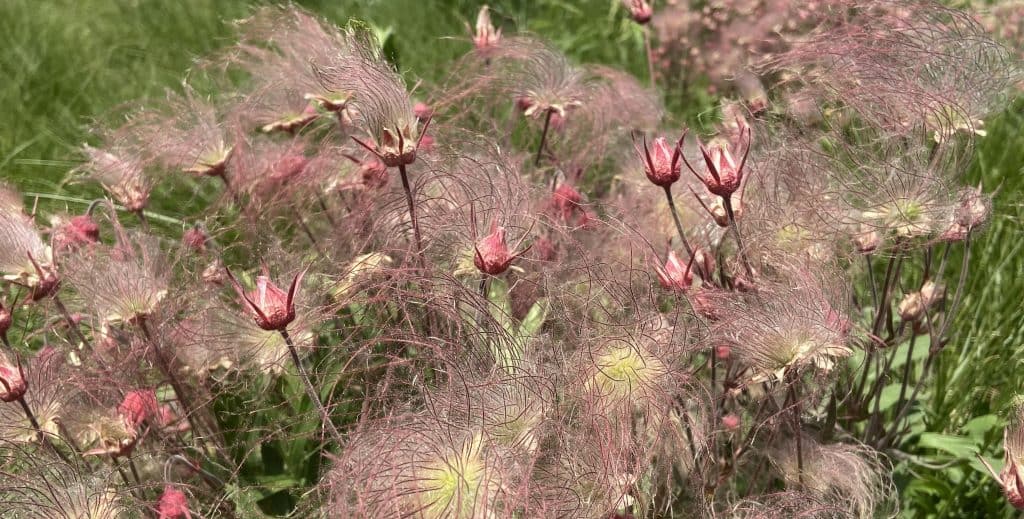
Native Plant Profile: Geum triflorum (Prairie Smoke)
Common Name: Prairie Smoke
Scientific Name: Geum triflorum
Family: Rosaceae
Native Range and Habitat
Geum triflorum, commonly known as prairie smoke, is native to the temperate and cold regions of North America—stretching across southern Canada and the northern and central United States, with strongholds in prairie, meadow, and open montane landscapes.
It is most often found in well-drained, open habitats—prairies, dry meadows, alvars, and upland grasslands—where soils range from sandy to clay but rarely remain waterlogged.
Though geographically widespread, it is ecologically specific—thriving in places where light is abundant, competition is limited, and seasonal shifts between moisture and drought define the rhythm of growth.

Description
This little Geum also known as Prairie Smoke, is a distinctive herbaceous perennial native to North America. This plant is celebrated for its unique, nodding flowers that resemble puffs of smoke. These blooms emerge in the spring, showcasing a beautiful transition from pink to burgundy as they mature.
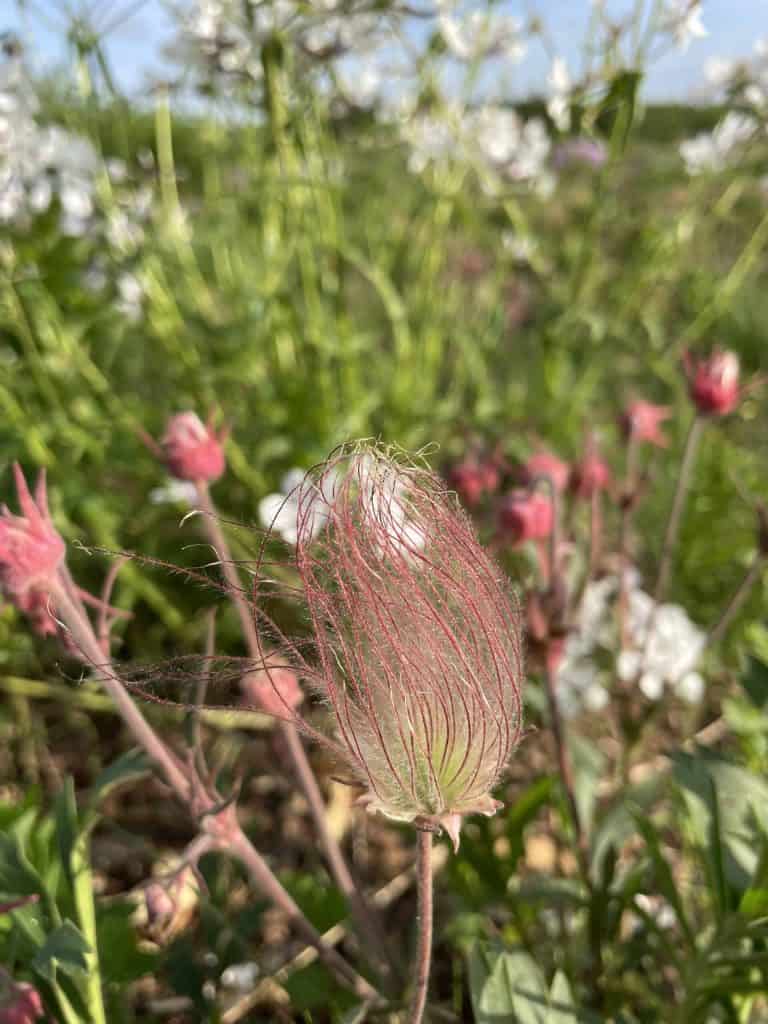
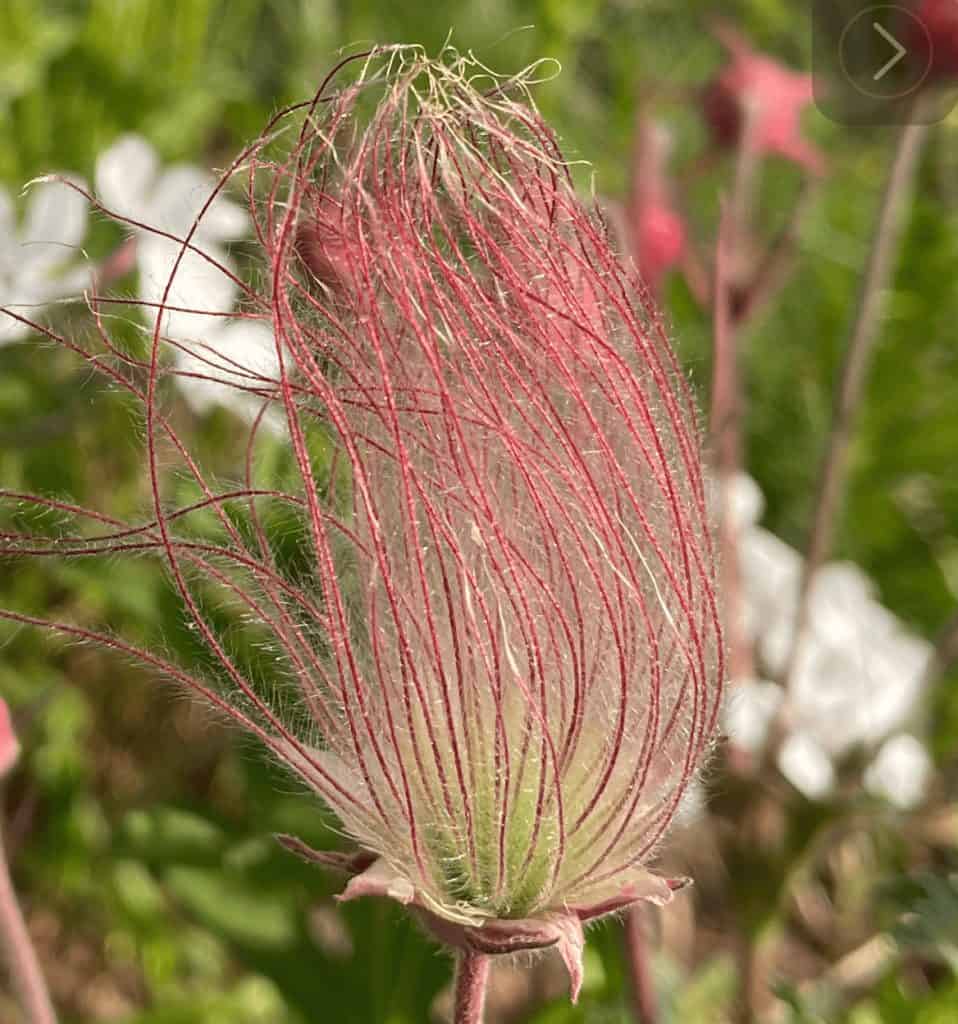
Following the flowering phase, Prairie Smoke produces feathery, elongated seedheads that persist into summer, maintaining visual interest in the garden even after the blooms have faded. These seedheads are particularly ornamental, adding texture and charm to any landscape.
Prairie Smoke typically reaches a height of 6 to 12 inches (15 to 30 cm) and spreads about 12 to 18 inches (30 to 45 cm) wide, making it an ideal choice for ground cover or as part of a mixed perennial border. Its foliage consists of basal rosettes of deeply lobed, fern-like leaves, which provide a lush and attractive backdrop to the delicate flowers.
The Seedheads: Where the Plant Reveals Itself
The flowers of prairie smoke are easily overlooked—small, nodding, and inward-facing.
It is what follows that defines the plant.
As pollination completes, the stems lift. The closed flowers open, and from within them emerge long, feathery styles—each one attached to a developing seed. These soft, silvery-pink plumes catch the light and move with the slightest air, creating the effect that gives the plant its name: smoke rising from the ground.
Each plume is not ornamental by chance—it is a mechanism. The hairs increase surface area, allowing the seed to travel by wind or attach to passing animals, dispersing across the landscape.
In this way, prairie smoke extends its presence quietly—carried not by force, but by movement.
Preferred Habitat and Native Region
Prairie Smoke thrives in open, sunny habitats where it can receive plenty of sunlight. Ideal environments include prairies, meadows, and open woodlands. These locations provide the well-drained soil conditions that Prairie Smoke prefers, allowing it to flourish without the risk of waterlogging.
Native to the central and western regions of North America, Prairie Smoke is commonly found across the Great Plains and the Rocky Mountains. Its range extends into parts of Canada, making it a versatile and hardy plant well-suited to a variety of climates and terrains within these areas.
Propagation
Prairie Smoke can be propagated using seeds or by dividing established clumps, both of which are effective methods to encourage healthy growth and expansion in your garden.
Seed Propagation: Seeds of Prairie Smoke require a period of cold stratification to successfully germinate. For best results, sow the seeds directly in the garden either in the fall or early spring. Sowing in fall allows the seeds to naturally undergo the cold stratification process over winter. If sowing in early spring, you may need to artificially stratify the seeds by placing them in a moist, cold environment (such as a refrigerator) for several weeks before planting.
Successful seed set depends on pollination—primarily by bumblebees, which are uniquely adapted to access the flower through vibration, or “buzz pollination.”
Propagation by Division: Dividing established clumps is another reliable propagation method. This can be done in early spring before new growth begins or in the fall after the growing season has ended. Carefully dig up the clump and separate it into smaller sections, ensuring each division has sufficient roots and foliage to support new growth.
Seasonal Interest Beyond Flowering
Prairie smoke is not a single moment plant.
It begins in early spring with low, fern-like foliage and nodding blooms that feed early pollinators emerging from winter.
It reaches its visual peak not in flower, but in seed—when the landscape softens with drifting plumes.
And even beyond this, the foliage remains as a low, textured presence, often persisting into cooler months depending on climate.
It is a plant of transition—marking the shift from spring to summer with quiet precision.
Ecological Role
Prairie smoke plays a subtle but important role in early-season ecosystems.
Its flowers provide nectar and pollen for emerging pollinators—particularly bumblebee queens, which rely on early resources to establish their colonies.
Later, its seeds contribute to the wider food web, supporting birds and small wildlife, while its presence helps stabilise soil in open landscapes.
It is not a dominant plant—but a supportive one.
And in ecological systems, those are often the most important.
Aftercare
Proper aftercare is essential for ensuring the health and beauty of Prairie Smoke. Here are some guidelines to help you maintain this unique perennial:
- Sunlight: Thrives best in full sun to partial shade, with at least 6 hours of direct sunlight daily.
- Soil: Prefers well-drained, sandy or loamy soil enriched with organic matter. Good drainage is crucial to prevent root rot.
- Watering: Once established, Prairie Smoke is drought-tolerant. Water deeply but infrequently, allowing the soil to dry out between waterings.
- Deadheading: Regularly remove spent flowers to encourage prolonged blooming.
- Foliage Maintenance: Trim back faded or damaged foliage to keep the plant tidy and prevent disease.
- Seedheads: Consider leaving some seedheads in place — they add ornamental appeal through summer and into fall.
- Fertilization: A light application of balanced, slow-release fertilizer in early spring is sufficient. Avoid over-fertilizing.
- Mulching: Apply organic mulch around the base to retain moisture, regulate soil temperature, and suppress weeds.
Companion Plants
Pairing Prairie Smoke with complementary plants enhances its beauty and contributes to a dynamic, biodiverse garden that supports local wildlife:
Native Prairie Plants:
- Echinacea (Coneflowers): Attract pollinators and create a colorful contrast with Prairie Smoke’s delicate nodding flowers.
- Asclepias (Milkweeds): Vital for monarch butterflies, their upright clusters provide a bold counterpoint to the subtle Prairie Smoke.
- Rudbeckia (Black-eyed Susans): Bright yellow flowers enhance overall visual appeal and attract a variety of pollinators.
Ornamental Grasses:
- Panicum (Switchgrass): Provides height and texture, with tall airy plumes that complement Prairie Smoke’s lower-growing flowers.
- Schizachyrium (Little Bluestem): Prized for blue-green foliage and striking fall color, creating a natural prairie-like backdrop.
Additional Companions:
- Liatris (Blazing Star): Spiky purple flower spikes provide dramatic contrast and attract pollinators.
- Coreopsis (Tickseed): Masses of bright daisy-like flowers pair well with Prairie Smoke’s muted tones.
- Sedum (Stonecrop): Low-growing and drought-tolerant, perfect for filling gaps with late-season interest.
Prairie Smoke is one of those rare native perennials that earns its place in every season — from smoky spring blooms to feathery summer seedheads.
A Note for Gardeners Outside Its Native Range
For those gardening beyond North America, prairie smoke is best understood not as a plant to replicate, but as a pattern to recognise.
Look instead for species within your own region that share its role—early flowering, low-growing, adapted to open, well-drained conditions, and capable of extending seasonal interest through seed.
Every landscape has its equivalent.
The task is not to import—but to understand.
Caution
Geum triflorum is not known to be toxic to humans or pets when ingested in small quantities. However, as with any plant, exercise caution and avoid consumption unless verified safe by a reliable source.
- Children and Pets: Teach children and pets not to consume plants or plant parts without adult supervision.
- Gardening Practices: Wear gloves when handling any plant material to protect against potential skin irritation.
Geum triflorum (Prairie Smoke) is a delightful and hardy perennial that offers both beauty and functionality. Its non-toxic nature, combined with its adaptability and ecological benefits, makes it a standout choice for gardeners looking to enhance their landscapes with native plants.
Prairie smoke does not demand attention.
It earns it slowly—first in flower, then in movement, and finally in memory.
It is not a plant that insists on being seen.
But once noticed, it is rarely forgotten.