What is the chop-and-drop method and why is it beneficial for sustainable meadow management?
The chop-and-drop method is a sustainable land management technique where plant material is cut and left in place to decompose naturally. It improves soil health, suppresses weeds, retains moisture, and supports wildlife while reducing the need for external inputs like mulch or fertilizers.
A return to how landscapes actually function
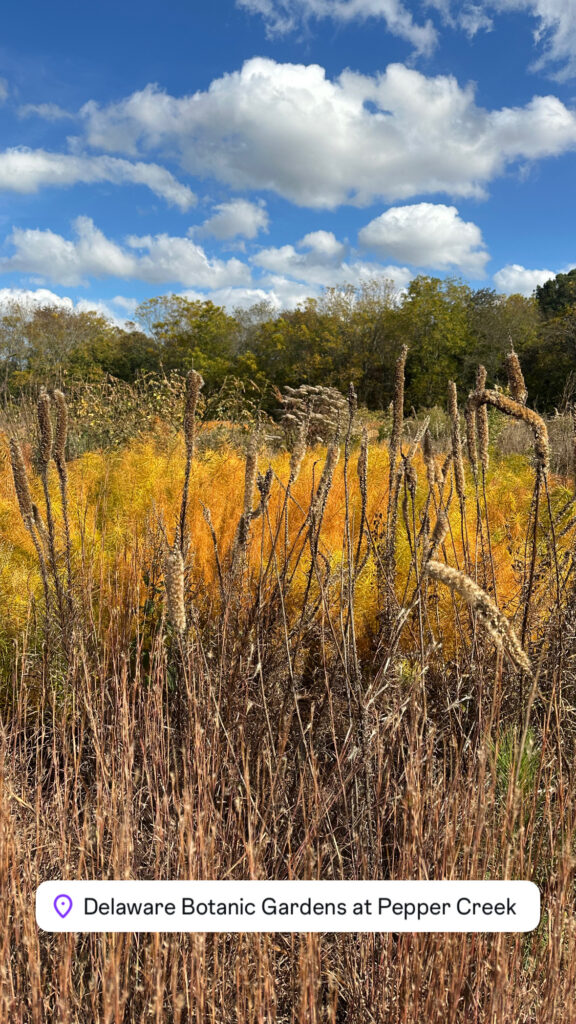
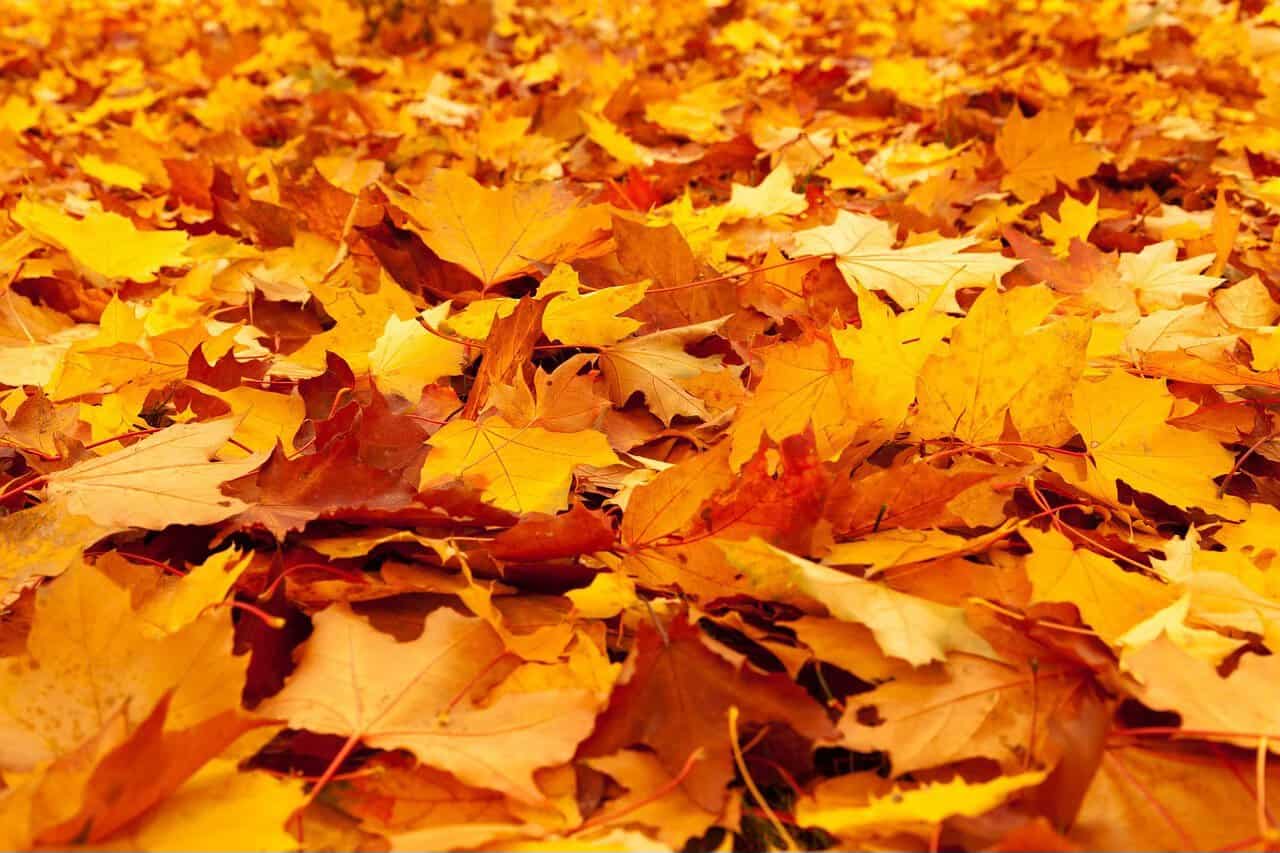
In a meadow, nothing is removed. Stems fall. Leaves settle. Time does the rest.
What we call “chop and drop” is not a new method.
It is a reintroduction of an old pattern—one that exists in forests, prairies, and grasslands across the world. Instead of clearing, we return. Instead of removing, we recycle.
Sustainable management of a wildflower meadow can be a rewarding way to support biodiversity and foster a healthy ecosystem. One of the most sustainable approaches is the chop-and-drop method, which involves delaying cutting meadow plants until late winter or early spring. The cut material is then chopped into small pieces — either by hedge trimmer or by hand — and left to decompose naturally on the ground.
This technique provides significant ecological benefits, enhances soil health, and eliminates the need for external inputs like imported mulch. As a natural mulch and soil improver, chop and drop uses last year’s plant material as this year’s mulch.
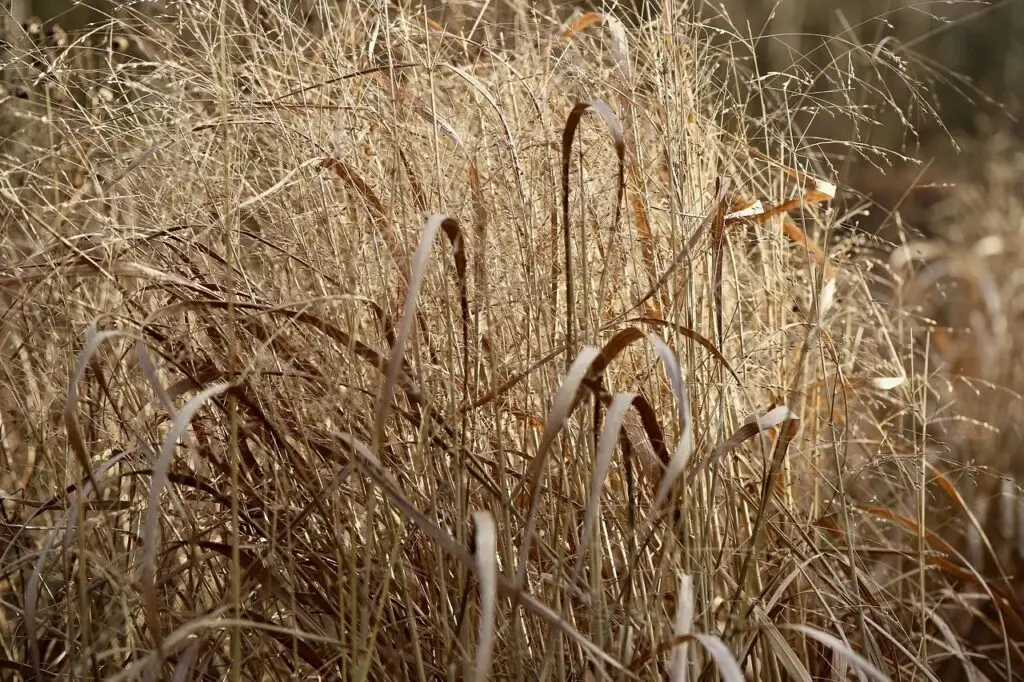
Supporting Wildlife Through the Winter
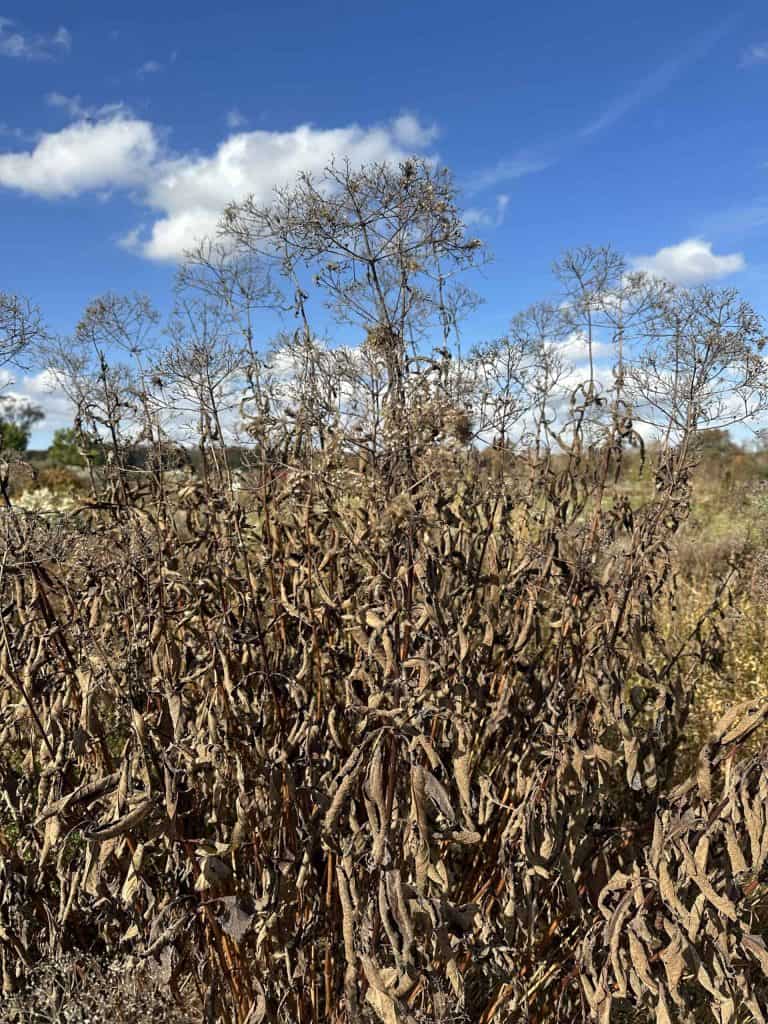
Leaving the meadow uncut until late winter or early spring ensures that its ecosystem can support a wide variety of wildlife:
- Insects find critical shelter: Many beneficial insects, including pollinators like bees and butterflies, overwinter in hollow plant stems or under leaf litter.
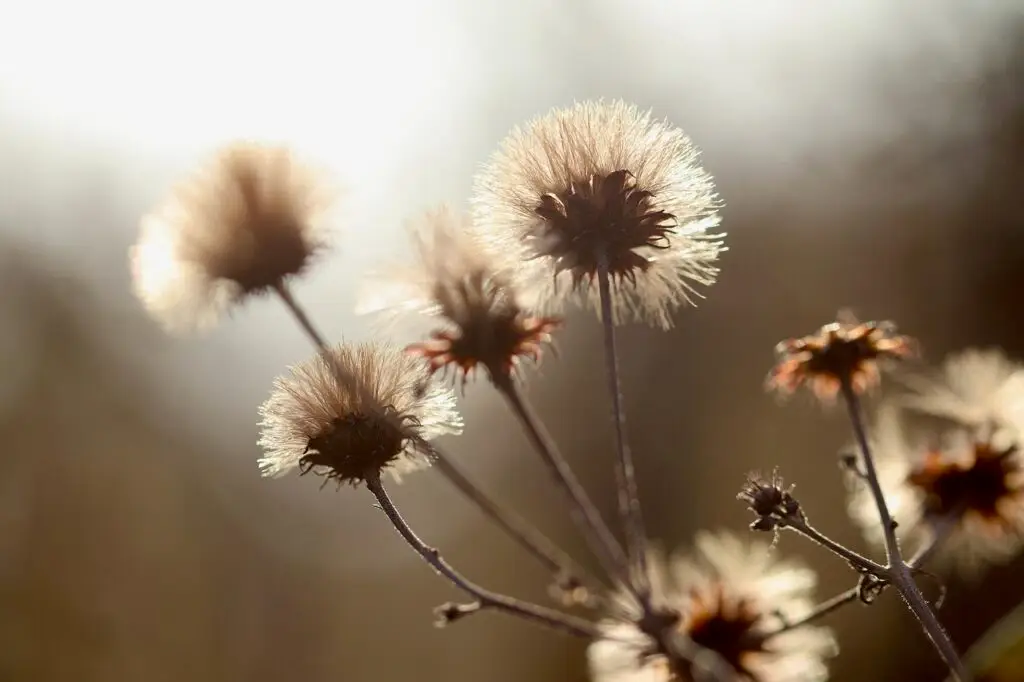
- Birds benefit from seeds and cover: The seeds on uncut plants serve as a vital food source during the colder months, while standing vegetation offers refuge from predators and harsh weather.
- Amphibians and small mammals thrive: Frogs, mice, and other small creatures rely on the dense cover of uncut plants for protection during winter.
Creating a Natural Mulch to Reduce Weeds
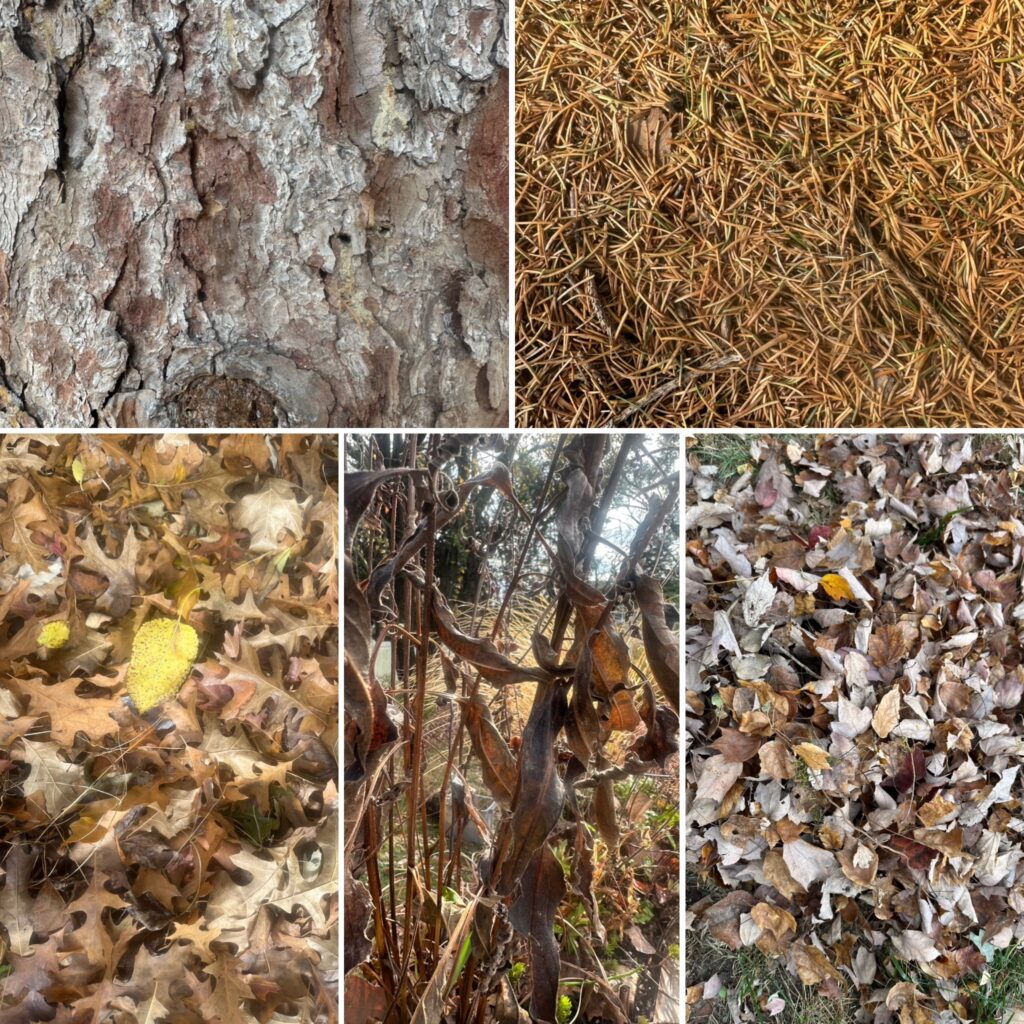
When plants are gradually cut and chopped into small pieces, the resulting material acts as a natural mulch. This mulch layer provides several practical benefits:
- Weed suppression: By covering the ground, the mulch creates a barrier that inhibits weed germination and growth, reducing competition for meadow plants.
- Moisture retention: Mulch limits evaporation, which is especially important in dry or exposed areas.
- Root protection: The decomposing material insulates and protects the delicate roots of meadow plants, helping them survive late-season temperature fluctuations.
This natural mulch is far superior to bringing in external materials, which may carry weeds, alter soil chemistry, or disrupt the meadow’s delicate ecological balance.
Building Healthy, Organic Soil
The chop-and-drop method has long-term benefits for soil health, as the decomposing plant material enriches the soil with organic matter. Over time, this improves:
- Soil fertility: As the mulch breaks down, it releases nutrients back into the soil, supporting healthy plant growth.
- Soil structure: The addition of organic matter enhances the soil’s ability to retain water and resist compaction, creating an ideal environment for wildflower roots.
- Microbial activity: Decomposing material encourages the growth of beneficial soil microbes, which play a crucial role in nutrient cycling and plant health.
Promoting Sustainability and Reducing External Inputs
Unlike traditional mulching methods that rely on imported materials, chop and drop uses what the meadow already produces. The method avoids:
- Introducing alien materials: Imported mulch can sometimes contain invasive species, pests, or pathogens that harm the native meadow ecosystem.
- Disrupting the natural cycle: By keeping nutrients within the system, chop and drop aligns with the meadow’s natural processes.
- Creating waste: Instead of removing plant material from the site, chop and drop ensures that every part of the meadow contributes to its health and sustainability.
Chop and drop uses last year’s plant material as this year’s mulch — nature’s own recycling system at its finest.
Steps for Implementing Chop and Drop
- Delay cutting until late winter or early spring: Allow standing plants to provide habitat and food for wildlife through the colder months.
- Cut the vegetation into small pieces: Use a hedge trimmer, scythe, or shears to chop the material into manageable fragments.
- Spread the chopped material evenly: Distribute the cuttings over the meadow to ensure even coverage.
- Monitor the decomposition process: As the mulch breaks down, observe how the plants respond and adjust management practices as needed.
Long-Term Benefits of Chop and Drop
- Soil quality improves: Enriched with organic matter, the soil becomes better able to support the deep roots of wildflowers and meadow plants.
- Weed pressure decreases: With a consistent layer of natural mulch, invasive weeds struggle to establish themselves.
- Biodiversity thrives: The habitat created by standing plants and decomposing material supports a wide range of organisms, from pollinators to birds and small mammals.
A European reflection — meadow traditions revisited
Across Europe, traditional hay meadows followed a similar rhythm:
Late cutting – Material left briefly, then removed or redistributed
Seasonal cycles respected
Chop and drop sits somewhere between:
Traditional meadow management and modern ecological restoration
In Poland, Wales, or anywhere with meadow systems, the principle remains the same:
Work with the cycle – Not against it
When NOT to Chop and Drop
A grounded guide to knowing when to step back, remove, or rethink
When should you avoid the chop-and-drop method?
Chop and drop should be avoided when plant material is diseased, when conditions are too wet, when nutrient overload is likely, or when the goal is to reduce soil fertility. It is also unsuitable in tightly managed spaces or where invasive species are present. In these situations, removing plant material is often the more responsible approach.
In Conclusion
The chop-and-drop method is a simple yet powerful way to manage a wildflower meadow sustainably. By working with natural processes — delaying cutting, chopping vegetation into small pieces, and allowing it to compost on-site — you can enhance soil health, support wildlife, and create a thriving ecosystem. Over time, this approach reduces the need for external inputs and fosters a meadow that is self-sustaining, vibrant, and teeming with life.
Resources and Further Reading
“The Meadow: Restoring Grasslands and Habitats with Native Plants” by James Hitchmough — A comprehensive guide to designing and managing meadows, including practical advice on chop-and-drop techniques.
“No-Mow Zone: How to Rewild Your Garden” by Benjamin Vogt — Explores rewilding principles and how chop-and-drop can be integrated into a wildlife-friendly yard.
“Bringing Nature Home” by Douglas W. Tallamy — A foundational book on native planting and sustainable practices for restoring biodiversity.
Royal Horticultural Society – Meadow Management Guide: rhs.org.uk
National Wildlife Federation – Creating Wildflower Meadows: nwf.org
Permaculture Research Institute – Chop-and-Drop Mulching Explained: permaculturenews.org
Lady Bird Johnson Wildflower Center – Meadow Maintenance: wildflower.org
Plantlife UK – “How to Manage a Wildflower Meadow”: plantlife.org.uk
The Wildlife Trusts – Localized Meadow Advice: wildlifetrusts.org