What does “right plant, the honest place” mean?
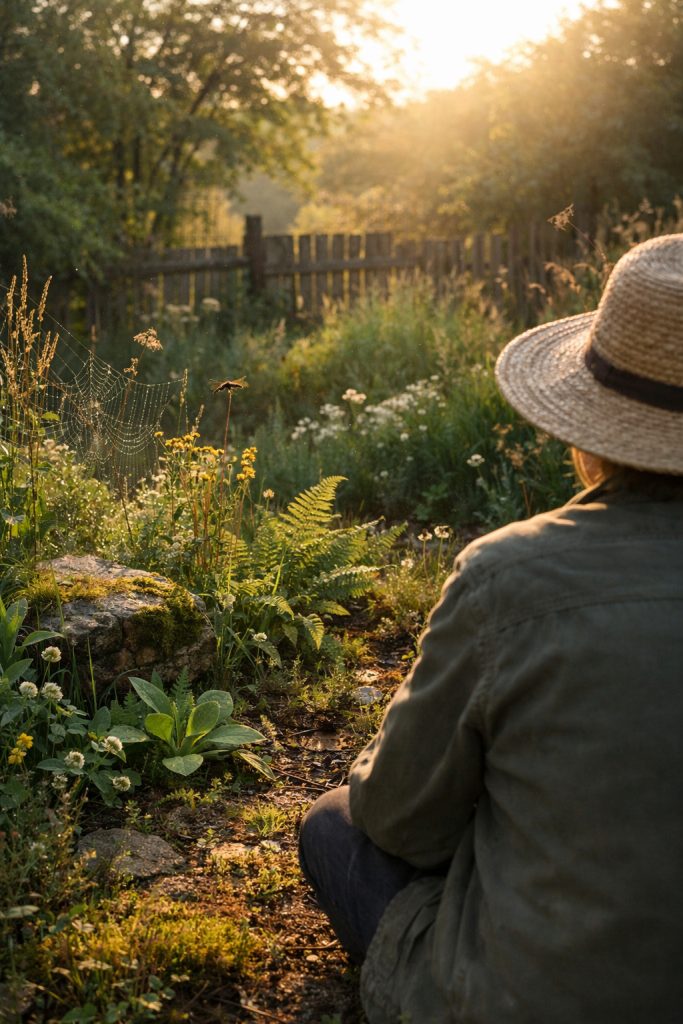
“Right plant, the honest place” means choosing plants that are naturally suited to the conditions where they are planted—light, soil, moisture, and exposure—so they can grow with minimal intervention and thrive rather than struggle.
There is a quiet frustration that sits beneath many gardens. Not always visible, but felt over time.
Plants that never quite settle.
Spaces that demand constant correction.
A sense that something is being asked of the land that it does not wish to give.
Much of this comes down to a simple idea—often repeated, but rarely understood:
right plant, right place.
The plant was never in the right place to begin with.
Section 1: What “Right Place” Actually Means
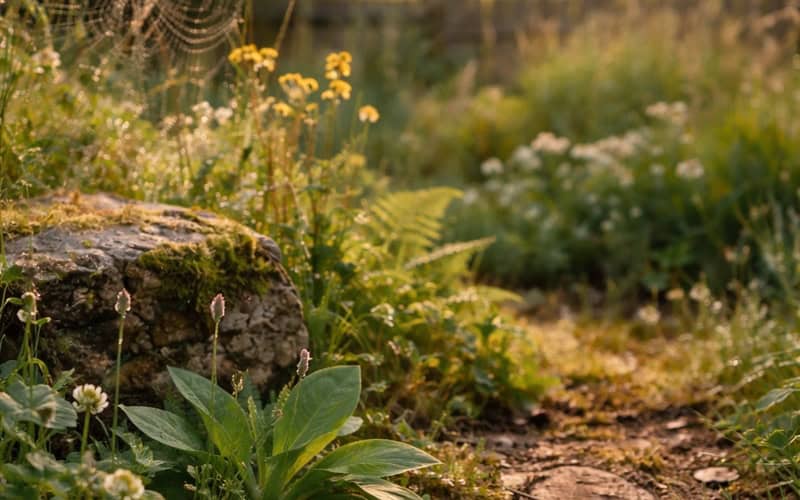
- light
- soil
- moisture
- exposure
In time, you begin to recognise that the most successful plantings are not the ones that look the most impressive at first, but the ones that settle in and remain. The ones that return each year with more presence, more ease.
“Right plant, right place” is a phrase repeated so often it risks becoming background noise. But when taken seriously, it is one of the most transformative principles in ecological gardening.
It begins with honesty.
Not what you wish your garden to be, but what it consistently shows itself to be.
If a space is dry, exposed, and windswept, no amount of care will turn it into a moist woodland edge. If the soil is heavy and holds water, drought-loving plants will always struggle, no matter how carefully they are planted.
The work is not to force change. It is to recognise alignment.
Section 2: Reading Conditions
Start by matching the conditions you observed — light, moisture, soil, exposure — with the natural preferences of plants. Native species offer a wide range of adaptations. There are plants that thrive in deep shade, in standing water, in poor sandy soils, in disturbed ground. The diversity is already there.
It is choosing them without imposing your own bias.
We are all drawn to certain aesthetics. Certain flowers, colours, forms. And sometimes we try to place those preferences into spaces where they do not belong. When they fail, we blame ourselves, or the plant.
But the land is simply holding its boundary.
There is a quiet shift that happens when you begin to work with that boundary rather than against it.
Maintenance reduces. Watering becomes less necessary. Plants establish more quickly and begin to interact with one another in ways that feel natural rather than managed.
Resilience replaces effort.
This does not mean you cannot shape your garden.
It means your shaping is guided by what is already possible.
Section 3: Matching Plants to Conditions
When a plant is placed in conditions it understands, it does not struggle to survive—it begins to express itself fully. Growth becomes steady. Resistance improves. Intervention reduces.
An honest place is not perfect.
It is not balanced, symmetrical, or controlled.
It is simply what is true.
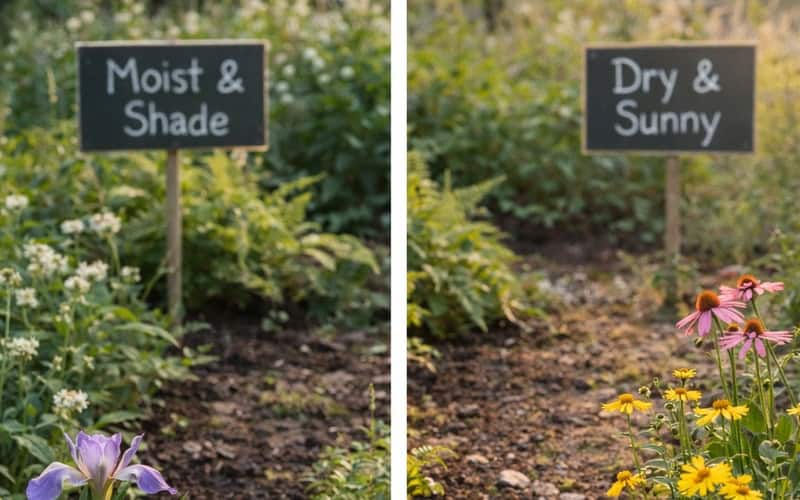
Dry means dry. Shade means shade. Exposure means exposure.
And within that truth, there is always a plant that belongs.
Right plant, right place is one of the most transformative principles in ecological gardening
The garden becomes less of a project.
And more of a place that holds itself.
Right plant, right place is not a rule.
It is a relationship built on respect.
And once that relationship is established, the garden stops asking so much of you.
It begins, quietly, to give back.
A Simple Way to Think About Placement
Dry and exposed → plants adapted to drought and sun
Moist and shaded → woodland and edge species
Compacted or disturbed → pioneers and resilient colonisers
Sheltered areas → softer, less stress-tolerant plants
The conditions are already defined. The question is whether we choose to work with them.
And if you ever feel unsure again, return to the beginning. The garden will always tell you what it needs—if you are willing to see it.
When planting begins from this understanding, something shifts. The garden becomes less about correction, and more about cooperation. And if you are unsure where to begin, return to the first step—learning to see what is already there.
Or continue the journey by exploring how to source plants that truly belong to your place.
Return → Before You Plant Anything
If this way of working resonates, explore more field guides on ecological gardening and working with native plants, or begin with the foundations of reading your landscape.