What is the best way to learn how to source native plants close to home?
How to source native plants close to home is to begin with observation, not purchase. Learning to understand your soil, light, and moisture conditions, and choosing species that naturally occur in your region, you create a more resilient and ecologically valuable landscape. Local nurseries and seed sources offer plants already adapted to your environment.
Start With Observation, Not Purchase
Sourcing native plants begins not with catalogues, but with attention.
Before anything is bought, planted, or planned, there is a quieter step—one that is often overlooked. It asks you to slow down and notice what is already present.
What grows without effort?
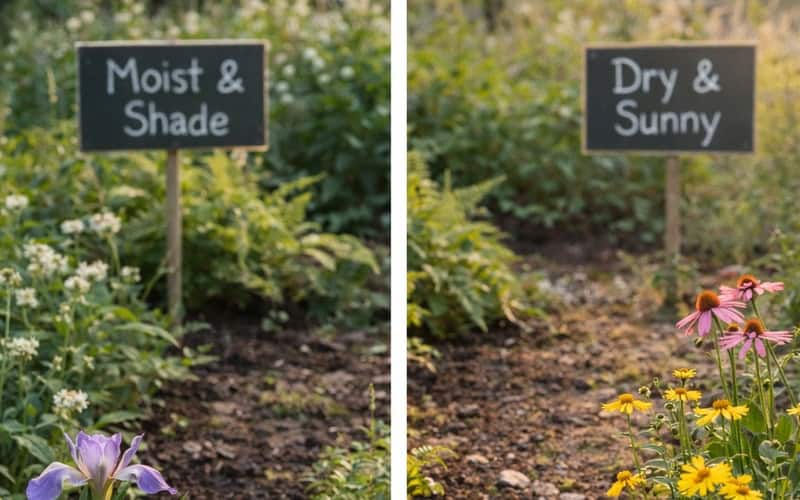
Where does water settle, and where does it drain away?
Which areas hold the sun, and which remain cool and shaded?
The land is already speaking. Most of what we need to know is already there.
In time, it becomes clear that the goal is not to impose a vision, but to recognise what belongs.
What “Local” Really Means
The word native is often used loosely. But in practice, it carries weight.
A plant may be native to a country, yet still feel out of place in a specific landscape. True belonging sits closer than that. It lives within soil type, rainfall pattern, exposure, and seasonal rhythm.
Local sourcing matters because:
- Plants adapted to your region establish more easily
- They support local pollinators and wildlife more effectively
- They require less intervention over time
A meadow in Delaware will not behave like one in Mid Wales.
A woodland edge in Poland will ask for something entirely different again.
To work with native plants is to work with place—not just geography, but nuance.
There is a quiet but important distinction between what is labelled “native” and what is truly of your place. A plant may be native to a country, even a continent, and yet still feel foreign in your specific landscape. Climate, soil, and subtle regional differences shape plants in ways that broad labels cannot capture.
So the question how to source native plants close to home shifts.
Not “Where can I buy native plants?” but “Where do native plants already exist in relation to this land?”
Where to Find Native Plants Near You
Once you begin to understand your site, sourcing becomes clearer.
Look first to what is close.
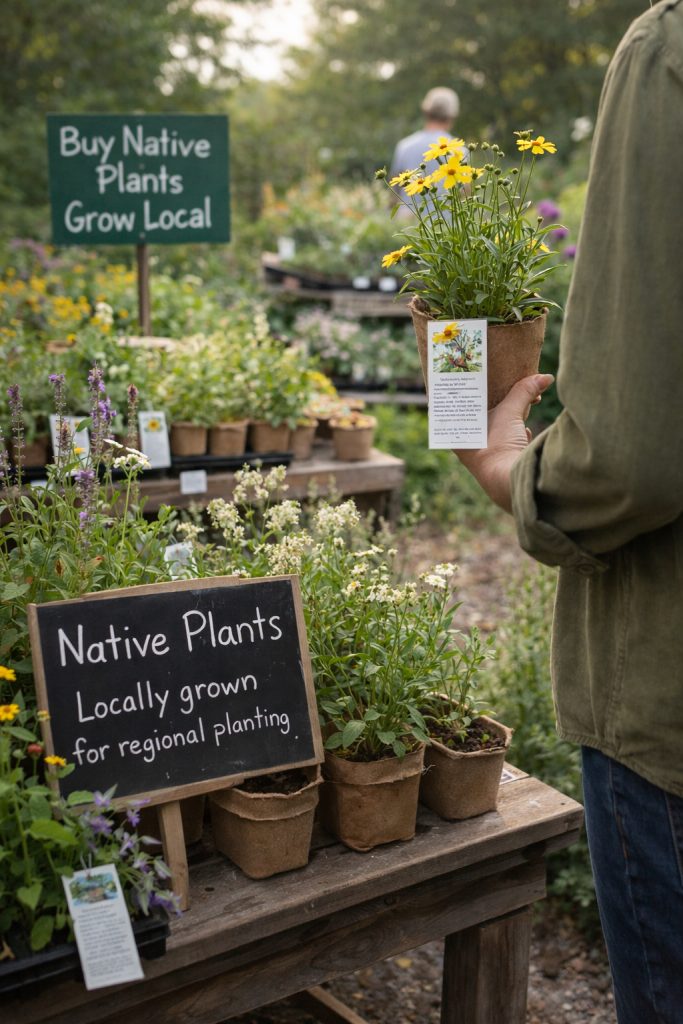
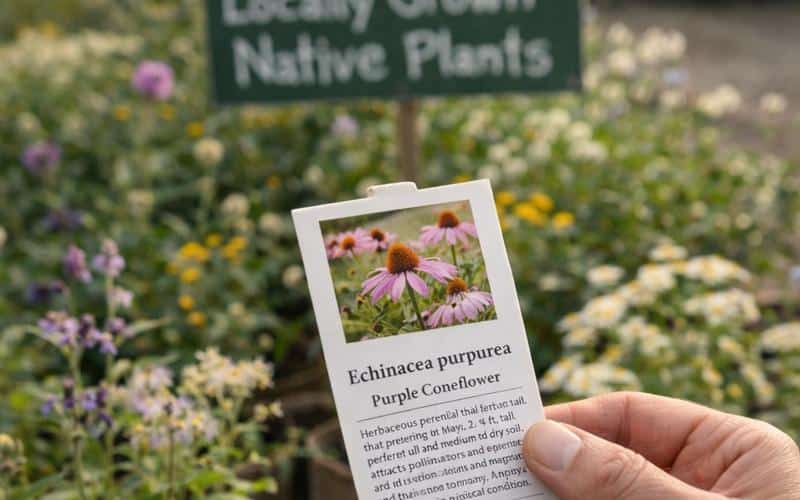
- Local nurseries that specialise in native or ecological planting
- Regional growers producing seed-grown plants adapted to your climate
- Conservation organisations and plant sales
- Seed exchanges and community networks
- Your own landscape, where seed can sometimes be responsibly gathered
The closer the source, the stronger the connection between plant and place.
There is a quiet confidence in planting something that has not travelled far.
Common Mistakes When Sourcing Native Plants
Even with the best intentions, it is easy to fall into patterns shaped by ornamental gardening.
A few to be aware of:
- Choosing plants for appearance alone, rather than function
- Buying cultivars that offer less ecological value
- Ignoring soil and moisture conditions
- Planting too much, too quickly
The landscape does not ask for abundance all at once.
It asks for understanding first.
A Slower Way: Let the Landscape Guide You
There is a tendency to rush the beginning—to fill space, to create something finished.
But native planting rarely works that way.
It builds over time.
A few well-chosen plants, placed carefully, will often do more than a large, hurried scheme. They settle. They respond. They begin to shape the space in ways that feel natural, rather than forced.
In this slower approach, something shifts.
The garden becomes less about control, and more about relationship.
Quick Checklist: Sourcing Native Plants Locally
Start small and allow the landscape to respond
Observe your site: light, soil, moisture, and exposure
Identify species native to your specific region
Source from local or regional nurseries where possible
Avoid heavily altered cultivars with reduced ecological value
The Work That Lasts
Sourcing native plants is not a transaction. It is a decision about how you want to work with the land.
Not every plant will thrive. Not every choice will be right the first time. But over time, patterns begin to emerge—ones that feel grounded, stable, and quietly successful.
This is slower work.
But it is the work that lasts.
Once you know what belongs, the question becomes simpler—and more precise: where should each plant live within your landscape?
Continue → Right Plant, Right Place
If you are unsure where to begin, start with observation. Or explore the field guides for practical steps shaped by real gardens and real landscapes.