Benefits of Growing American Elderberry (Sambucus canadensis) at home.
The American elderberry (Sambucus canadensis) is a native shrub familiar with North America’s East Coast; its native range is expansive. This versatile plant offers numerous ecological benefits, serving as a crucial resource for pollinators and wildlife species. Growing elderberry at home is a great way to explore the symbiotic relationship between the American elderberry and the ecosystem, highlighting its importance as a host plant. Bonus Article: Benefits of Black Elderberry Syrup Recipe >> How to propagate: Sambucus canadensis ‘Adams’


Native Range of Sambucus americana (American Elderberry)
Sambucus canadensis is a species of elderberry native to North America. Its range spans a vast area, encompassing diverse climates and habitats. Here’s a detailed breakdown of its native distribution:
Geographic Extent:

Canada – Found in the southern regions of: Ontario – Quebec – Manitoba – New Brunswick and Nova Scotia
United States – Widespread across most of the contiguous U.S., including:
Northeast: Maine, New Hampshire, Vermont, Massachusetts, Connecticut, Rhode Island, New York, and Pennsylvania.
Mid-Atlantic: New Jersey, Delaware, Maryland, Virginia, West Virginia, and Washington D.C.
Southeast: North Carolina, South Carolina, Georgia, Florida, Alabama, Mississippi, Louisiana, Arkansas, Tennessee, and Kentucky.
Midwest: Ohio, Indiana, Illinois, Michigan, Wisconsin, Minnesota, Iowa, Missouri, and Kansas.
Great Plains: Nebraska, South Dakota, and North Dakota.
Southwest: Texas, Oklahoma, New Mexico.
West Coast: Found sporadically in parts of Oregon and California.
Mexico and Central America – Native to northeastern and central parts of Mexico, including higher elevations. Its range also extends into some Central American regions, primarily in cooler, mountainous areas.
Habitats: American elderberry thrives in a variety of environments, typically where moisture is readily available. Its preferred habitats include:
Wetlands: Riverbanks, floodplains, and swamp edges.
Open Woodlands: Forest edges, clearings, and disturbed areas.
Prairies: Moist grasslands.
Rural Areas: Along roadsides and ditches with good sunlight.
Ecological Significance
The wide native range of Sambucus canadensis reflects its adaptability to different climates and soils, making it an integral part of North America’s ecosystems. Its flowers provide nectar for pollinators, while its berries serve as a vital food source for over 45 species of birds and various mammals.
This adaptability has also made it a staple in landscaping, conservation efforts, and wetland restoration projects across its native range.


Characteristics of American Elderberry
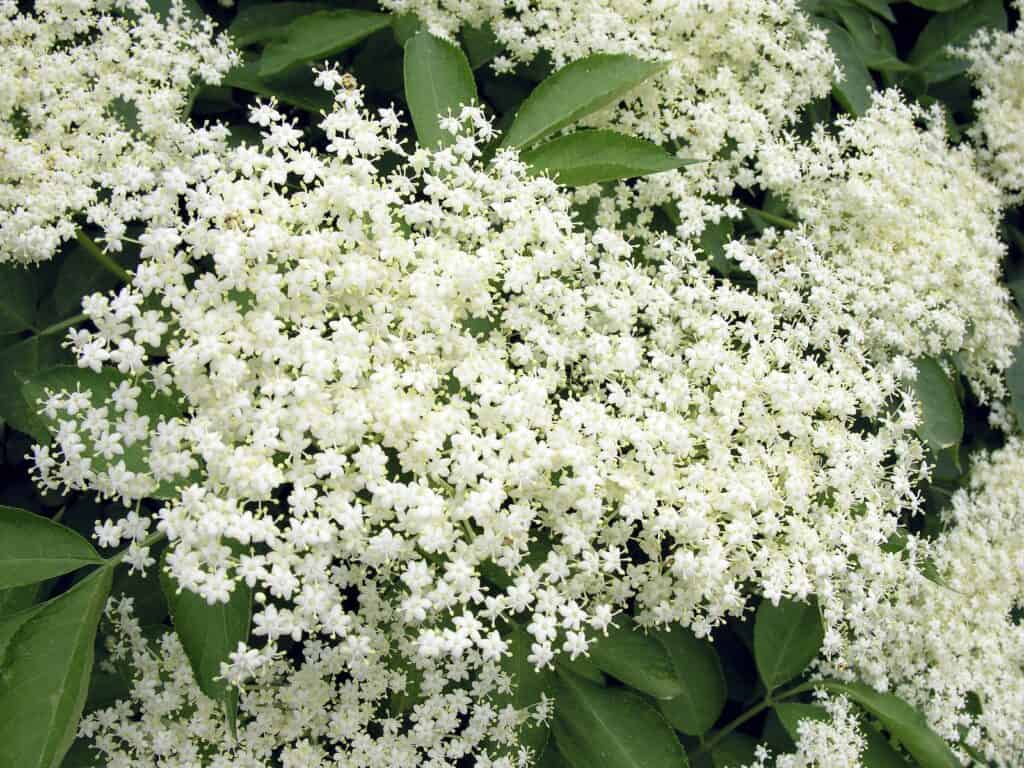
Appearance: A deciduous shrub, it typically grows 5-12 feet tall with compound leaves and clusters of white flowers.
Habitat: Prefers moist, well-drained soils and can be found in a variety of habitats including wetlands, forests, and along stream banks.
Blooming Season: Flowers from late spring to early summer, followed by the production of dark purple berries in late summer to fall.
Benefits to Pollinators
Nectar Source: The clusters of white flowers are rich in nectar, attracting a variety of pollinators such as bees, butterflies, and moths.
Pollination Process: These pollinators facilitate cross-pollination, ensuring genetic diversity and the successful production of berries.
Specific Pollinators: Notable species include honeybees, bumblebees, and various solitary bee species.
Benefits to Wildlife
Food Source: The berries are a vital food source for many bird species, including the American robin, cedar waxwing, and gray catbird.
Habitat and Shelter: The dense foliage provides shelter and nesting sites for birds and small mammals.
Nutritional Value: The berries are rich in vitamins A and C, offering a nutritious food option for wildlife during the late summer and fall.
Host Plant Keystone Role
American Elderberry (Sambucus americana) as a Keystone Native Species
A keystone species is one that has a disproportionately large impact on its ecosystem relative to its abundance. Sambucus americana(American elderberry) fits this definition due to its critical role in supporting biodiversity, stabilizing ecosystems, and promoting ecological health. Here’s how American elderberry earns its status as a keystone native species:
1. Essential Food Source for Wildlife
The American elderberry provides abundant, high-nutrition resources for various species:
Flowers: In spring and early summer, the profuse white flower clusters offer nectar and pollen for pollinators like bees, butterflies, and moths.
Berries: The dark purple-black fruits ripen in late summer and fall, feeding a wide range of birds (e.g., robins, bluebirds, cedar waxwings) and mammals (e.g., squirrels, raccoons, bears, and foxes).
Seasonal Timing: Because elderberry produces its fruit during a critical late-summer period, it helps bridge the gap between springtime flowering plants and fall-maturing species.
2. Habitat Creation
American elderberry provides essential shelter and nesting opportunities:
Dense Growth: Its shrubby growth habit offers cover for small mammals, ground-nesting birds, and insects, protecting them from predators.
Structural Support: Vines, such as native honeysuckles and clematis, use elderberry stems as support, further increasing local biodiversity.
3. Support for Pollinators and Beneficial Insects
Pollinators: The flowers attract a variety of native pollinators, including bees, wasps, butterflies, and beetles, ensuring cross-pollination that benefits nearby plants.
Specialist Relationships: Certain native insects, like the elderberry borer beetle (Desmocerus palliatus), rely exclusively on elderberry as a host plant.
Predatory Insects: By attracting pollinators, elderberry indirectly supports predatory insects that help control pests in the surrounding ecosystem.
4. Erosion Control and Soil Health
Deep Root System: Elderberry’s root network stabilizes soils along streambanks, wetlands, and other riparian zones, reducing erosion.
Nutrient Cycling: As a fast-growing species, elderberry contributes organic matter to the soil through leaf litter and decomposing roots, enhancing fertility and moisture retention.
5. Role in Wetland and Riparian Ecosystems
Elderberry thrives in moist habitats like wetlands and streambanks, where it:
Filters Pollutants: Its roots absorb nutrients and contaminants from stormwater runoff, improving water quality.
Supports Aquatic Life: By stabilizing soils, it prevents sedimentation in streams and rivers, protecting fish habitats.
Forms Plant Communities: Elderberry often grows alongside other native wetland species like willows, dogwoods, and sedges, contributing to a diverse and resilient ecosystem.
6. Cultural and Ecological Legacy
Human Use: Native American tribes valued elderberry for its medicinal properties, food (berries and flowers), and tools (hollow stems for flutes and pipes).
Ecological Connection: These historical uses highlight elderberry’s importance as a plant deeply integrated into human and ecological systems.
7. Resilience to Climate Change
Adaptability: Elderberry’s ability to thrive in a range of conditions—wetlands, open fields, forest edges—makes it a versatile species in changing climates.
Carbon Sequestration: Like other woody plants, elderberry helps remove carbon dioxide from the atmosphere.
Keystone Impact Summary
Direct: Provides critical food and shelter for countless species.
Indirect: Stabilizes ecosystems by supporting pollinators, controlling erosion, and contributing to water and soil health.
Cultural & Ecological: Deeply intertwined with the natural and human history of North America.
By fostering biodiversity and enhancing ecosystem resilience, Sambucus canadensis exemplifies how a single native plant can hold an ecosystem together—earning its title as a keystone species.
Larval Host: Certain moth and butterfly species, such as the cecropia moth, use the elderberry as a host plant for their larvae.
Supporting Biodiversity: By providing a habitat and food source for various insects, birds, and mammals, the elderberry helps support overall biodiversity in the ecosystem.
Ecological Impact: Its presence enhances soil health through leaf litter and root interactions, promoting a healthy and balanced environment.
Conservation and Cultivation
Conservation Efforts: Planting and protecting elderberries can aid in conservation efforts for pollinators and wildlife.
Cultivation Tips: Easy to grow from seeds or cuttings, elderberries require minimal maintenance and can be integrated into gardens and restoration projects.
Pest Resistance: Generally resistant to pests and diseases, making it a hardy choice for natural landscaping.
How to propagate: Sambucus canadensis ‘Adams’
Quick facts:
Common Name: Adams Elderberry
Botanical Name: Sambucus canadensis ‘Adams
Plant Type: Deciduous shrub
Mature Size: 6–10 feet tall and wide
Hardiness Zones: USDA Zones 3–9
Sun Requirements: Full sun to partial shade
Soil Type: Moist, well-draining soil; tolerates a range of soil types but thrives in slightly acidic to neutral pH (6.0–7.0)
Bloom Time: Early summer (white flower clusters)
Fruit: Large, dark purple-black (heavy fruiting) berries in late summer to early fall
Uses: Ornamental, edible fruit for syrups, jams, wines, and wildlife attraction
Growth Rate: Fast-growing
Propagation Guide: Hardwood Cuttings – Buy Fresh Cuttings >>
Hardwood cuttings are a reliable way to propagate elderberries, including ‘Adams.’ This method is best done during late fall through early winter when the plant is dormant.
What You’ll Need
Sharp, clean pruning shears
Rooting hormone (optional but recommended)
Well-draining potting mix or sandy soil
Planting containers or a dedicated outdoor bed
Watering can or spray bottle
Plastic bag or mini greenhouse (optional for humidity control)
Step-by-Step Propagation
1. Choose the Right Wood:
Select healthy, mature stems from the current year’s growth. Look for pencil-thick, firm stems with no signs of disease or damage.
2. Cut the Stems:
Use sharp pruning shears to cut 6–10-inch sections of hardwood.
Make the bottom cut just below a node (the bump where leaves attach).
Cut the top end straight across, about 1–2 inches above a node.
3. Prepare the Cuttings:
Remove any remaining leaves, as hardwood cuttings don’t need them.
If using rooting hormone, dip the bottom end of each cutting into the powder or gel.
4. Plant the Cuttings:
Stick the bottom end of the cutting into a pot filled with a well-draining potting mix or directly into an outdoor propagation bed.
Bury the cutting so at least two nodes are below the soil and one or two are above.
Space cuttings 4–6 inches apart if planting in a group.
5. Water Thoroughly:
Water the soil to settle it around the cutting. Keep the soil evenly moist but not soggy throughout the rooting process.
6. Provide the Right Conditions:
Outdoors: Choose a sheltered spot with indirect light or partial shade.
Indoors: Place containers in a cool area with good air circulation. Cover with a plastic bag to maintain humidity if necessary.
7. Wait for Roots to Form:
Hardwood cuttings take longer to root than softwood ones. Be patient! Roots usually develop in 2–3 months, depending on conditions.
8. Transplant Once Established:
Check for root growth by gently tugging on the cutting after 8–12 weeks. Once rooted, transplant the cutting to its permanent location in spring.
Care for Young Plants
Watering: Keep the soil consistently moist but not waterlogged.
Mulching: Apply a 2–3 inch layer of mulch around the base to retain moisture and suppress weeds.
Fertilizing: Use a balanced fertilizer in spring to encourage strong growth.
With this guide, you’ll have a thriving elderberry shrub ready to produce beautiful flowers and delicious berries in no time!
Conclusion
The American elderberry (Sambucus canadensis) is pivotal in supporting pollinators and wildlife on the East Coast of North America. Its benefits as a nectar source, food provider, and habitat contribute to a thriving ecosystem. By understanding and promoting the growth of this native shrub, we can enhance biodiversity and ecological health in our environments.
Bonus Article: Benefits of Black Elderberry Syrup
Immune Support: Elderberries are rich in vitamins A and C, essential for maintaining a healthy immune system. They also contain flavonoids, which have antioxidant properties that help protect cells from damage.
Cold and Flu Relief: Elderberry syrup is often used as a natural remedy to reduce the severity and duration of cold and flu symptoms. It can help alleviate coughs, sore throats, and congestion.
Anti-inflammatory Properties: The antioxidants in elderberries can help reduce inflammation, which may benefit conditions such as arthritis.
Digestive Health: Elderberries have been known to promote healthy digestion and alleviate constipation due to their high fiber content.
Antioxidant Powerhouse: The dark purple color of elderberries comes from anthocyanins, powerful antioxidants that can protect the body from oxidative stress and free radicals.
How to Make Black Elderberry Syrup
Ingredients:
1 cup dried black elderberries (or 2 cups fresh or frozen)
4 cups water
1-2 tablespoons fresh ginger (grated or finely chopped)
1 teaspoon ground cinnamon
1/2 teaspoon ground cloves
1 cup raw honey (or more, to taste)
Instructions:
Prepare Ingredients: Measure out your dried elderberries, water, ginger, cinnamon, and cloves. Ensure your honey is ready for later use.
Simmer the Berries: In a medium-sized saucepan, combine the elderberries, water, ginger, cinnamon, and cloves. Bring the mixture to a boil, then reduce the heat to low and let it simmer for about 45 minutes to an hour, until the liquid has reduced by almost half.
Strain the Mixture: Once the mixture has reduced, remove it from the heat and let it cool slightly. Using a fine mesh strainer or cheesecloth, strain the liquid into a clean bowl, pressing the berries to extract as much liquid as possible. Discard the solids.
Add Honey: Allow the liquid to cool to lukewarm temperature. Add the honey to the strained liquid and stir well until fully dissolved. Adjust the sweetness to your taste.
Bottle the Syrup: Pour the elderberry syrup into a clean glass jar or bottle and seal tightly. Store it in the refrigerator, where it will keep for up to two months.
Dosage Recommendations:
For daily immune support: Take 1 teaspoon to 1 tablespoon per day.
For cold and flu symptoms: Take 1 teaspoon every 2-3 hours while awake.
Additional Tips:
Always use ripe elderberries and never eat them raw, as they can be toxic when uncooked.
Adjust the spices to your liking. Some people prefer a stronger cinnamon or ginger flavor.
You can also add other immune-boosting ingredients, such as echinacea or rosehips, to the mixture if desired. By making your elderberry syrup, you can ensure it’s free from additives and preservatives, providing a natural and effective way to support your health.