

A Practical, Ecology-First Approach Using Plants, Biodiversity, and Garden Design
Designing an Eco-Garden that manages ticks, mosquitoes, gnats, and biting flies are becoming an increasing important and a huge concern for gardeners, homesteaders, dog owners, and anyone spending more time outdoors. Across the U.K, Europe and North America, changing weather patterns, warmer winters, and fragmented landscapes are creating ideal conditions for biting insects and tick populations to expand
The reaction is often immediate: sprays, chemicals, foggers, pesticides, and attempts to sterilise the landscape.
But there is another approach.
An ecological garden can be designed to reduce pest pressure naturally by improving biodiversity, increasing airflow and sunlight, supporting predator species, and using practical garden management techniques that make outdoor spaces less inviting to ticks and biting insects.

This is not about eliminating nature.
It is about designing a healthier balance between people, pets, wildlife, and the landscape itself.
“Pest control is not just a product—it is a condition you create.”
Why Ticks and Mosquitoes Are Increasing in Gardens and Rural Landscapes
Ticks and biting insects thrive in:
Damp, shaded environments
Dense vegetation with little airflow
Standing water
Thick ground thatch and unmanaged edges
Areas with frequent wildlife movement
Ticks in particular prefer:
Humid ground layers
Meadow-to-woodland transition zones
Long grass edges
Dense evergreen cover
Mosquitoes require standing water for breeding, while gnats and biting flies often increase where airflow is poor and organic matter accumulates in wet conditions.
This does not mean you need to remove biodiversity or abandon ecological gardening.
In fact, the opposite is often true when it comes to Designing an Eco-Garden
A diverse, functioning ecosystem is far more capable of regulating pests than a simplified, sterile landscape.
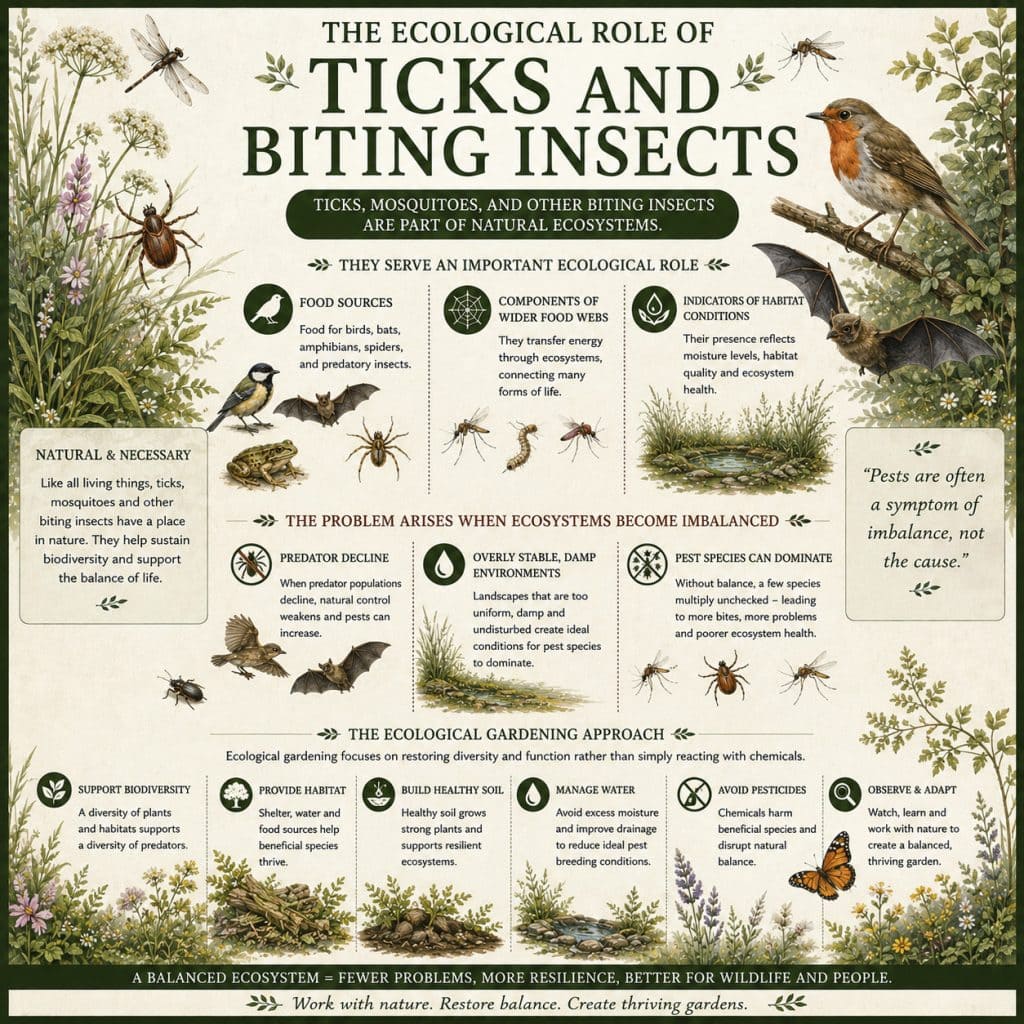
The Ecological Role of Ticks and Biting Insects
Ticks, mosquitoes, and other biting insects are part of natural ecosystems.
They serve as:
Food sources for birds, bats, amphibians, spiders, and predatory insects
Components of wider food webs
Indicators of habitat conditions and moisture balance
The problem arises when ecosystems become imbalanced.
When predator populations decline and landscapes become overly stable, damp, and undisturbed, pest species can dominate.
“Pests are often a symptom of imbalance, not the cause.”
This is why ecological gardening focuses on restoring diversity and function rather than simply reacting with chemicals.
Tick-Borne Diseases and Why Prevention Matters
In many parts of Europe, including Poland and the Bug River valley region, tick-borne diseases are a legitimate concern.
Common tick-borne illnesses include:
Lyme disease (Lyme borreliosis)
Anaplasmosis
Babesiosis
Tick-borne encephalitis (TBE)
For dogs, babesiosis can be particularly serious because it affects red blood cells and can progress quickly.
Mosquitoes and biting flies can also spread disease while creating stress and discomfort for people and animals.
This makes prevention and landscape awareness important parts of modern ecological garden design.
The First Principle: Build a Living, Breathing Garden
Bare soil is not the answer.
But neither is dense, collapsing vegetation that traps moisture and creates stagnant ground conditions.
The goal is:
Covered soil
Open structure
Good airflow
Diverse planting
Active ecological relationships
“Healthy gardens breathe.”
Best Crop Cover Plants for Tick and Mosquito Management
One of the simplest ways to improve garden ecology is by using annual crop covers and flowering support plants that increase biodiversity without creating dense, wet mats of vegetation.
Recommended Ecological Cover Crops
Phacelia (Phacelia tanacetifolia)
One of the best pollinator plants available. Excellent for bees, hoverflies, and beneficial insects while improving soil structure and creating a light, airy canopy.
Buckwheat (Fagopyrum esculentum)
Fast-growing cover crop that suppresses weeds, supports pollinators, and improves soil biology.
Crimson Clover (Trifolium incarnatum)
Nitrogen-fixing crop cover that supports pollinators while protecting and enriching the soil.
White Mustard (Sinapis alba)
Quick-establishing annual that helps suppress weeds and improve soil structure while providing flowers for insects.
These plants:
Protect the soil
Improve biodiversity
Support beneficial insects
Prevent stagnant conditions
Diversity creates resilience
Herbs and Flowers That Support a Healthy Eco-Garden
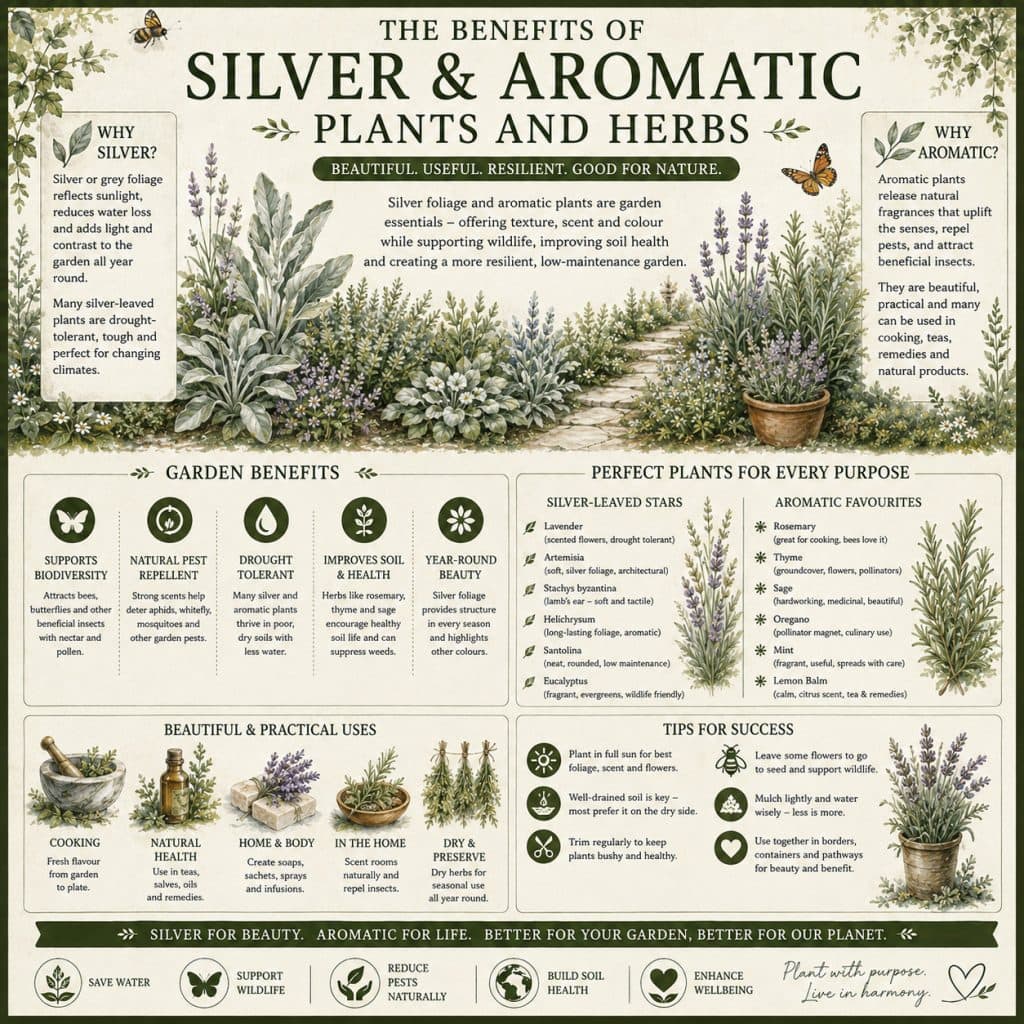
Many herbs traditionally associated with insect deterrence are most effective when viewed as part of a wider ecological system.
Functional Herbs for Eco-Garden Design
Coriander (Coriandrum sativum)
Supports hoverflies and beneficial insects while providing edible leaves and seeds.
Dill (Anethum graveolens)
Excellent for pollinators and predatory insects such as parasitic wasps.
Chamomile (Matricaria chamomilla)
Useful medicinal herb that supports pollinators and self-seeds easily in ecological systems.
Calendula (Calendula officinalis)
Long-flowering companion plant that attracts beneficial insects and provides material for salves and skin care.
Fennel (Foeniculum vulgare)
Important insect-support plant with flowers that feed predator species.
French Marigold (Tagetes patula)
Widely used companion plant that supports pollinators and soil health.
These plants can also be harvested for:
Herbal infusions
Natural sprays
Tinctures
Roll-ons and balms
This creates a practical relationship between garden ecology and personal protection.
“Grow what you use. Use what you grow.”
Garden Management Techniques That Reduce Tick Habitat
Planting alone is not enough.
The structure and maintenance of the garden matters just as much.
1. Maintain Tidy Edges
Ticks concentrate where meadow meets hedge, woodland, or fence lines.
Maintain:
Clear garden edges
Defined pathways
Short-cut transition strips
2. Lift Low Branches
Remove low-hanging branches on:
Thuja hedges
Pine trees
Dense shrubs
This improves:
Sunlight penetration
Airflow
Ground drying
3. Create Mown Pathways
Rather than mowing everything, maintain:
Clear walking routes
Open seating areas
Defined movement corridors
This reduces contact with dense vegetation while preserving biodiversity elsewhere.
4. Avoid Standing Water
Keep:
Rain barrels covered
Drainage functioning
Water moving rather than pooling
Mosquito control begins with water management.
Pollinator Crop Circles and Mixed Planting Systems
Instead of planting in straight rows, ecological gardens benefit from:
Mixed planting
Companion planting
Pollinator crop circles
Layered planting systems
Combining vegetables, herbs, flowers, and cover crops creates:
Better insect diversity
More predator species
Reduced pest dominance
Improved pollination
This type of planting also creates visually beautiful and productive gardens.
“A living garden is not a monoculture—it is a community.”
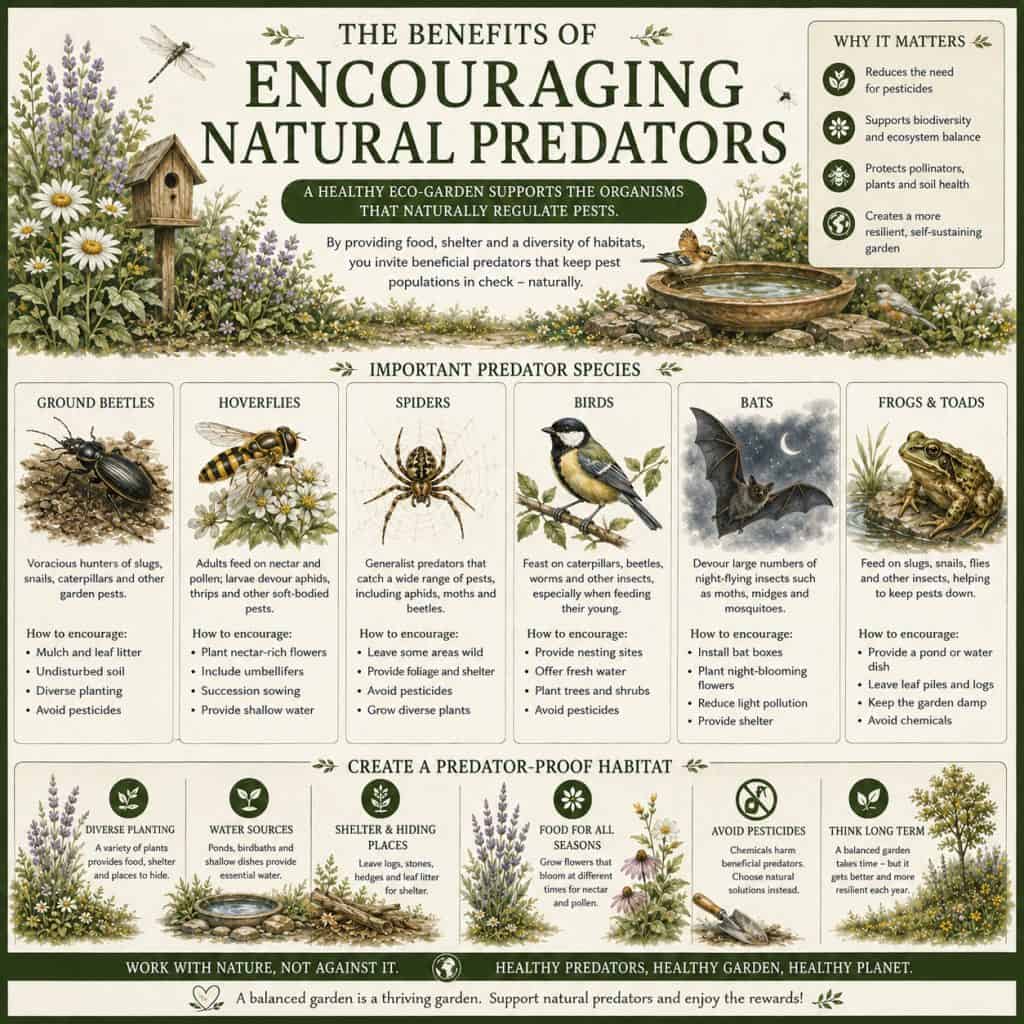
Encouraging Natural Predators
A healthy eco-garden supports the organisms that naturally regulate pests.
Important predator species include:
Ground beetles
Hoverflies
Spiders
Birds
Bats
Frogs and toads
You can support them by:
Leaving some meadow areas unmown
Creating habitat diversity
Avoiding excessive pesticide use
Maintaining flowering plants throughout the season

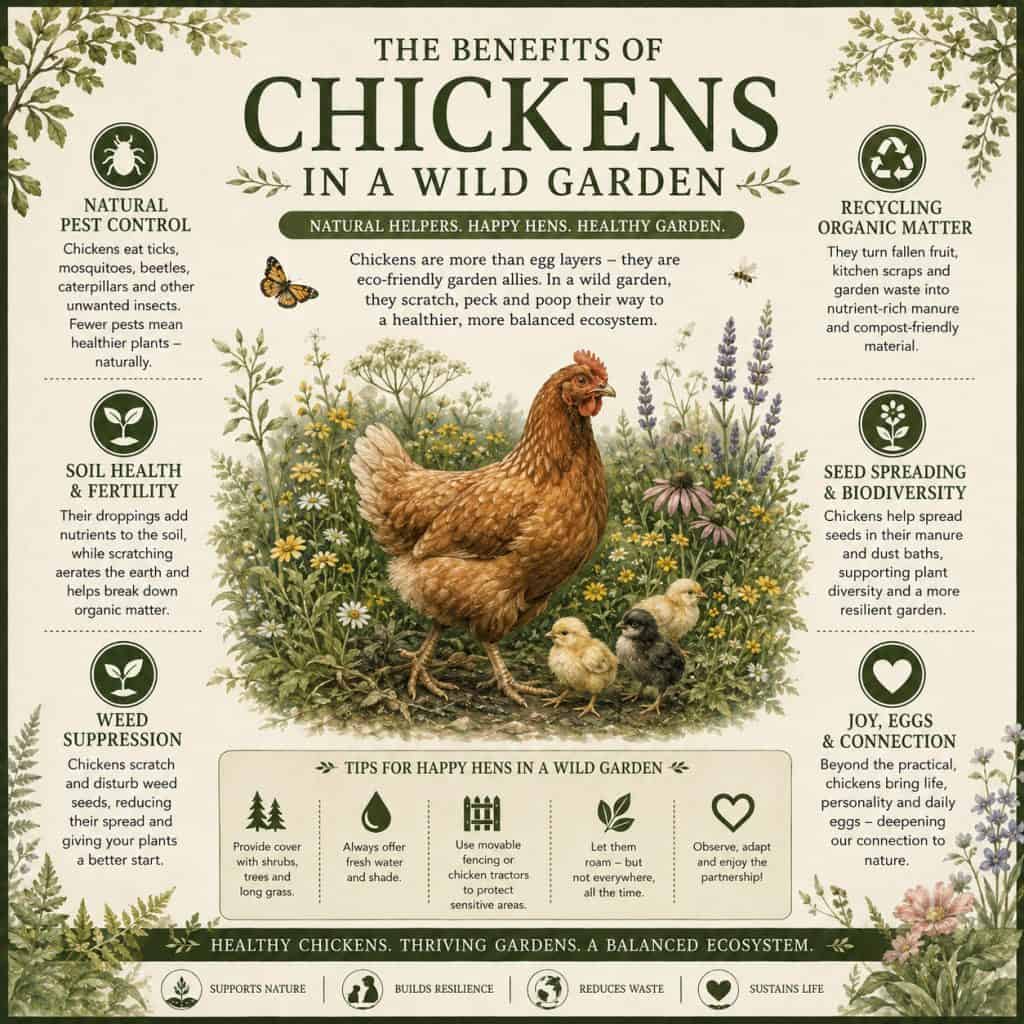
The Role of Chickens in Tick Control
Free-range chickens can contribute to ecological pest management by:
Eating ticks and larvae
Disturbing insect habitat
Cycling nutrients through the garden
They are not a complete solution, but they can form part of an integrated eco-garden system.
From Ecology to Everyday Use
One of the most rewarding aspects of ecological gardening is the ability to harvest plants for practical use.
Many gardeners are now creating:
Natural tick sprays
Herbal deterrent oils
Garden salves and roll-ons
Infused botanical products
This creates a direct connection between:
The plants you grow
The biodiversity you support
The health and wellbeing of people and pets
Final Thoughts: Designing a Garden That Regulates Itself
The goal of an eco-garden is not to eliminate insects.
It is to create a landscape where:
Biodiversity is high
Predator species are supported
Moisture and airflow are balanced
Pest pressure is naturally reduced
When planting, structure, and management work together, gardens become healthier, more productive, and more resilient over time.
“Control is not achieved by removing life—but by organising it.”
And perhaps that is the deeper lesson ecological gardening teaches us:The healthiest landscapes are not the most controlled.
They are the most balanced.
“A healthy eco-garden is not one without insects. It is one where diversity creates balance. By supporting predators, improving habitat structure, building healthy soil, and encouraging biodiversity, gardeners can reduce nuisance insects while creating landscapes that are richer, healthier, and more resilient for both people and wildlife.” — Stephen Pryce Lea, Native By Nature.
Further Reading and Resources
Understanding Tick Ecology
Learn more about tick biology, habitat preferences, and prevention strategies from the CDC:
Tick Prevention and Awareness Guide
Managing Mosquitoes Without Harming Wildlife
Mosquito control is most effective when focused on habitat management and eliminating standing water:
Mosquito Biology and Habitat Management
Supporting Beneficial Insects
Many insects that visit our gardens are predators of mosquitoes, flies, aphids, and other nuisance species:
The Xerces Society for Invertebrate Conservation