Before the Garden had a Name
There is a question I have been asked more than once.
“When did you become interested in ecological gardening?”
The honest answer is that I never did.
“I simply grew up surrounded by the living world, long before anyone thought to give it a name.”
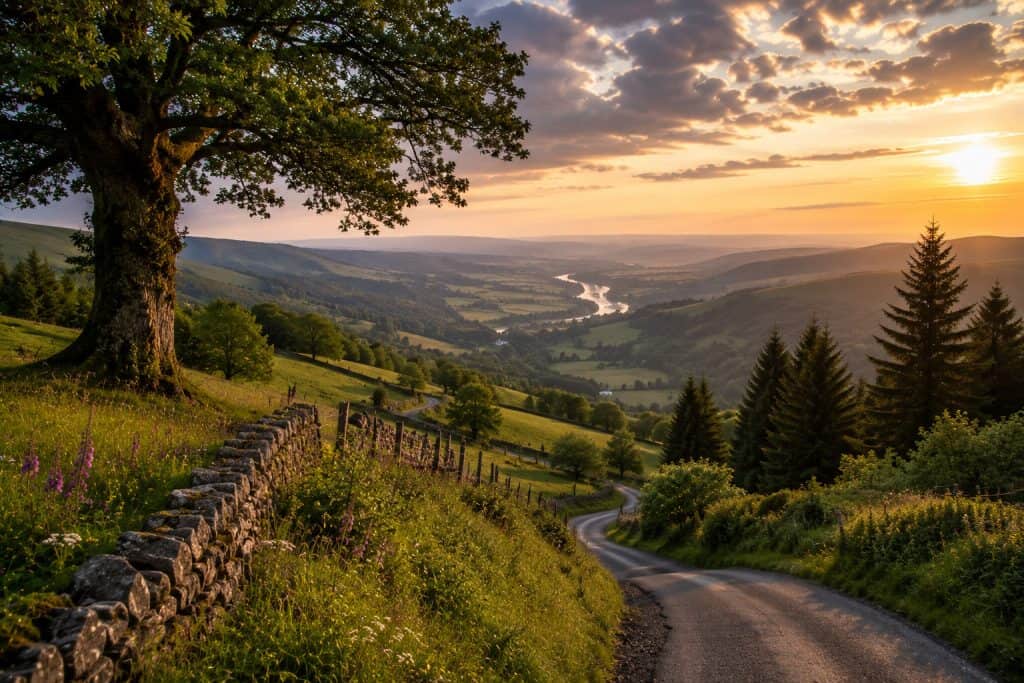
Long before phrases such as biodiversity, ecosystem services, rewilding, and nature-based solutions became part of everyday conversation, I was a small boy growing up on a modest smallholding in the Welsh border country.
There were hedges to lay, ditches to clear, goats to milk, calves to feed, and seasons that refused to wait because someone was having a difficult day.
Nature was never somewhere we visited.
It was home.
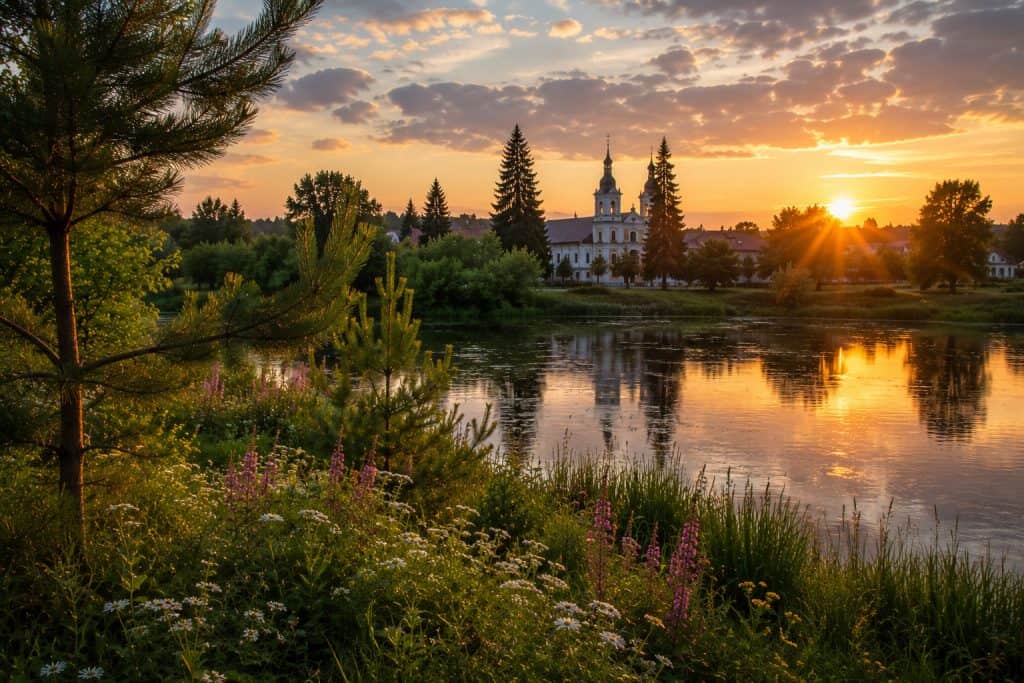
Where the Lessons Began
My mother never spoke about sustainability. She simply lived it. Nothing was wasted if it could serve another purpose. Food followed the seasons.
Compost was made because it improved the soil, not because someone had written a policy about reducing landfill. Hedges sheltered livestock, flowers fed insects, and every task had a quiet practicality behind it.
Looking back, she wasn’t teaching environmentalism.
She was teaching relationships.
The relationship between people and land.
The relationship between patience and reward.
The relationship between observation and understanding.
Those lessons settled somewhere deep inside me long before I realised they would shape the rest of my life.
“My career followed what appeared, on paper, to be an entirely conventional path.” I trained in horticulture, worked in retail, became self-employed as a landscape gardener, managed other people’s gardens, and eventually found myself leading horticultural teams in America.
Titles came and went. Responsibilities grew. Organisations became larger.
Yet I never stopped thinking of myself as simply a gardener.
Even today, after directing departments, managing landscapes measured in acres, speaking publicly, and writing books, that is still the description that feels most truthful.
I am a gardener.
Nothing more.
Nothing less.
Finding a Language for Ecological Gardening
People occasionally assume that moving to the United States transformed my thinking.
It didn’t.
America didn’t change me.
It connected me.
For the first time I found myself surrounded by people who were asking the same questions I had been asking instinctively throughout my life. Native plants, ecological restoration, pollinators, succession, resilience, biodiversity—suddenly there was a vocabulary for ideas I had carried since childhood.
The Delaware Botanic Gardens became far more than a workplace.
It became a place where the fragments of my life assembled themselves into a coherent picture.
The child who had watched insects in Welsh hedgerows.
The apprentice learning traditional horticulture.
The landscape gardener solving practical problems.
The conservationist beginning to question conventional landscaping.
They were not separate people.
They had always been the same gardener.
The difference was that I finally had words to explain what I already understood through experience.
That realisation has followed me back across the Atlantic.
Learning to Listen to the Land
Returning to rural Podlasie has been a humbling experience.
In America, people knew my work.
In Poland, almost nobody knows my past.
The land does not care about job titles.
Neither do neighbours.
Here, respect is earned differently.
Not by what appears on a business card.
But by how you treat people.
How you care for your property.
Whether your actions match your words.
At first that adjustment was surprisingly liberating.
I realised I had never really been motivated by professional titles anyway.
I was motivated by purpose.
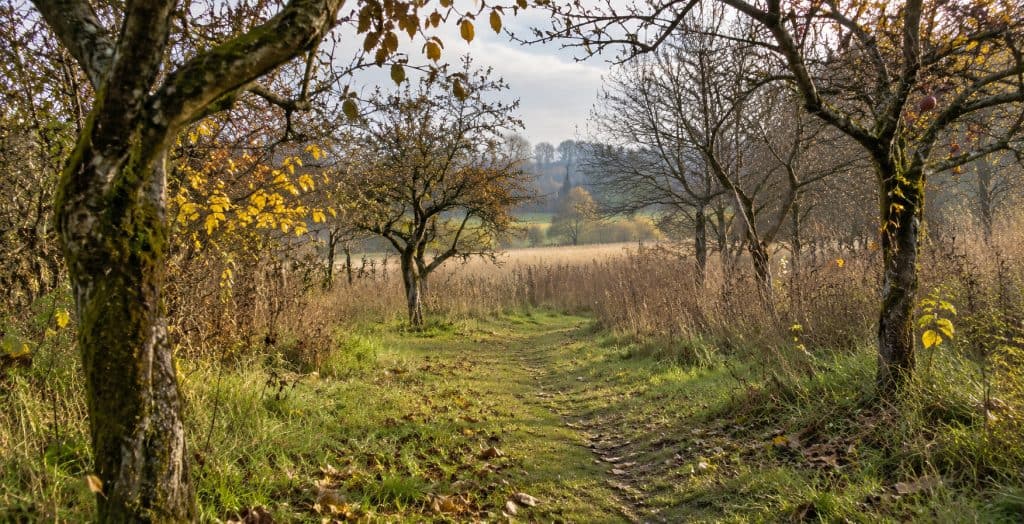
And purpose can exist whether you are managing twelve acres at a botanic garden or quietly restoring an abandoned orchard behind an old farmhouse.
Perhaps the greatest lesson since returning has been learning to resist the urge to impose.
Modern horticulture often celebrates transformation.
Clear everything.
Level everything.
Plant something new.
But landscapes remember.
Leave a neglected meadow for a year and forgotten flowers begin to reappear.
Old roses emerge from beneath brambles.
Fruit trees reveal themselves after decades of neglect.
Seeds planted by previous generations quietly wait for the opportunity to grow again.
Had I arrived with machinery, landscape fabric, imported shrubs, and a predetermined design, much of that living history would already have disappeared.
Learning what belongs in a landscape also means understanding where plants originate and how they interact with the wider ecosystem. It is a subject I explore further in Finding What Belongs: How to Source Native Plants Close to Home.
Instead, I chose to wait.
To observe.
To allow the land to introduce itself before I introduced myself to it.
Ecological restoration does not always begin with planting. Sometimes it begins with recognising what is already there: the native wildflowers surviving beneath vigorous grasses, the insects sheltering in fallen branches, the soil recovering beneath years of accumulated organic matter, and the quiet relationships between species that have developed without our intervention.
That decision has changed everything.
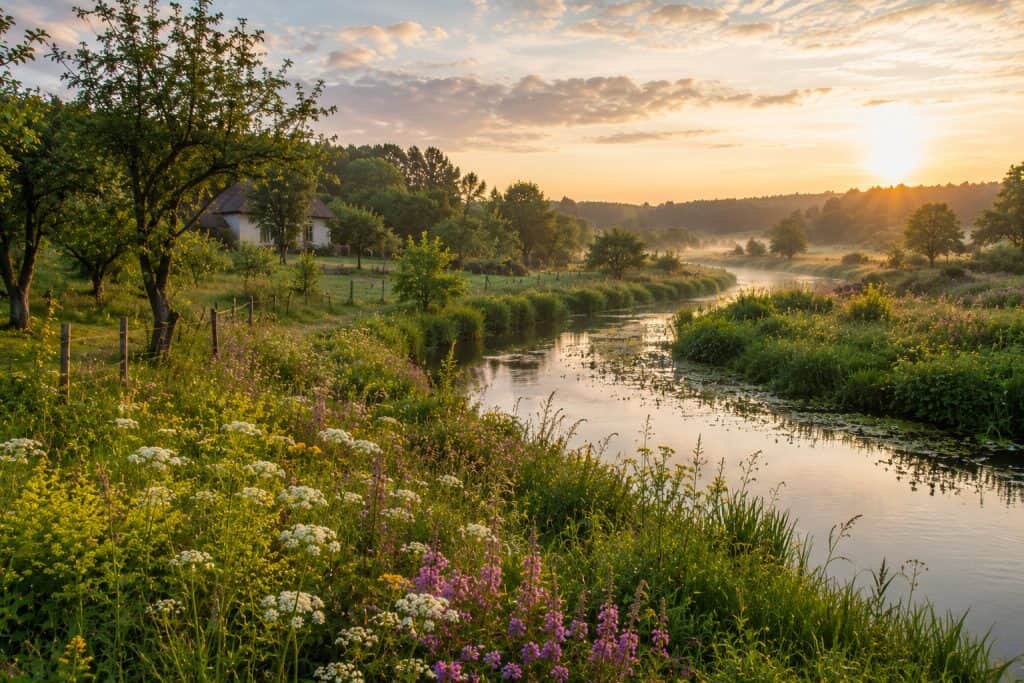
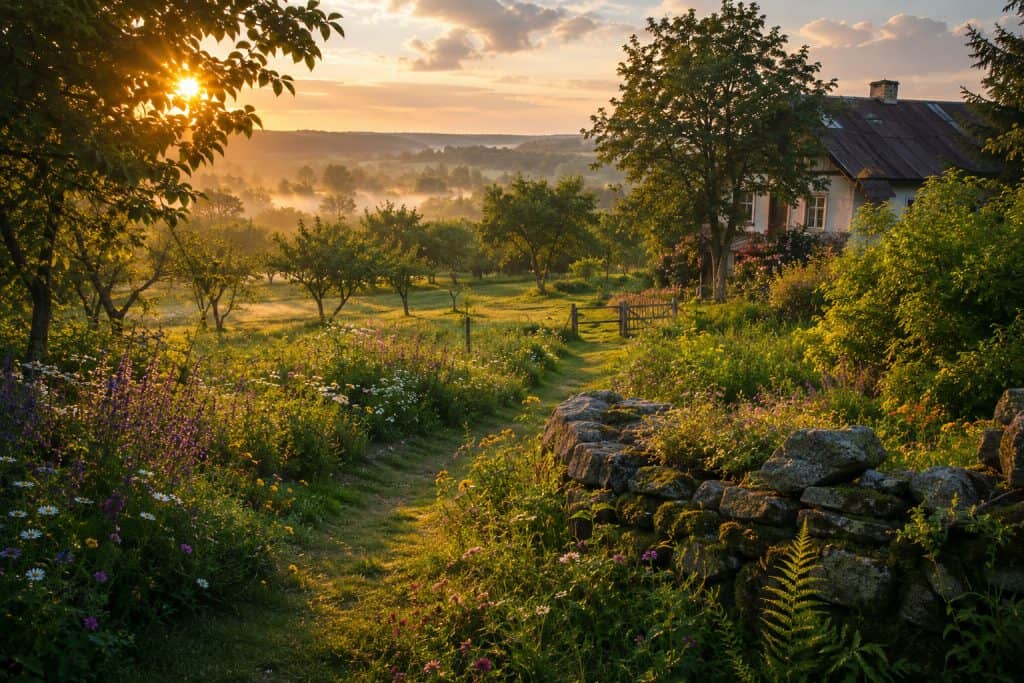
What We Leave Behind
One afternoon, while walking through our orchard and meadow, a friend stopped and quietly said that if she were to die before us, she would like her ashes scattered there.
The garden was barely beginning, before the Garden had a Name.
The restoration incomplete.
Yet something about the place had spoken to her.
It was one of the greatest compliments I have ever received.
Not because she admired what we had created.
But because she sensed what we were trying to protect.
It reminded me of my Mum and Nan, who had each made a similar request: that their ashes be scattered to the wind and returned to the soil at the hillside garden of Vaynor Chapel in Berriew, Wales.
Those moments reminded me that gardens are not merely collections of plants.
They are places where people recognise something of themselves.
As the restoration continues, neighbours have begun sharing stories about the land, discussing boundaries, offering practical help, and contributing ideas.
Small gestures—a shared fence, local knowledge, conversations over a garden gate—have become just as important as planting another tree.
Perhaps that is stewardship.
Not arriving with all the answers.
But creating enough trust that the land and the people around it begin revealing their own stories.
These reflections form part of Native by Nature – Fall: Letting Go, the third book in my seasonal horticultural memoir series. It explores grief, change, ageing and the quiet lessons of ecological stewardship—not simply through the gardens we create, but through the landscapes, relationships and memories we learn to release.
It is about seeing more clearly.
About understanding that gardens are never really ours.
We borrow them.
We care for them for a little while.
Then we pass them on.
The wildflowers beneath our feet often belong to someone we never knew.
The orchard may outlive us by generations.
The hedgerow we plant today may shelter birds long after our own voices have faded from the landscape.
That is not a melancholy thought.
It is one of life’s greatest comforts.
For if we are fortunate, we leave behind something more valuable than a finished garden.
We leave behind a place that remembers how to grow.
Stephen Pryce Lea — Native by Nature
“I have never set out to become an environmentalist, an author, or a director. I set out simply to become a better gardener. The longer I have lived, the more I have realised those things were never separate. Every season has been teaching the same lesson: when we care for the living world with patience and humility, we do not simply restore the land. We slowly discover that we belonged to it all along.”
About the Author
Stephen Pryce Lea is a horticulturist, author and advocate for ecological gardening, whose career spans Britain, the United States and Poland.
He is the author of Native by Nature, a seasonal horticultural memoir series exploring the relationship between people, plants and place, and founder of iGrowHort, where practical horticulture meets ecological stewardship.
The Seven House Journal
Notes from Seven House in Podlaskie, Poland. Seasonal observations, native plants, ecological gardening and the quiet lessons of restoring a landscape. Delivered occasionally, straight from the garden.