
As the growing season slows, the urge start the autumn garden cleanup can arrive almost as quickly as the falling leaves. Beds are cut back, borders tided, and every loose stem, twig or branch gathered away.
But a garden in autumn is not a room waiting to be tided-up. It is a living place moving into a seasonally adolescene phase. Some things need tyding away, but others are best left standing.
Ask what the garden needs from you now?
Begin with the place, not the calendar
Autumn arrives differently from one garden to another. A wet, mild October asks different things of the land than an early frost or a dry, windy season. Even within one garden, a sheltered border, a sunny lawn and a low, damp corner will each have their own needs.
Before beginning, take a slow walk around the space. Notice where leaves are collecting, where water gathers, which plants are still holding their form, and which paths need to stay clear. Look for signs of disease or plants that could spread unwanted seed.
This simple pause helps separate useful work from habit. The garden does not need every part treated in the same way.
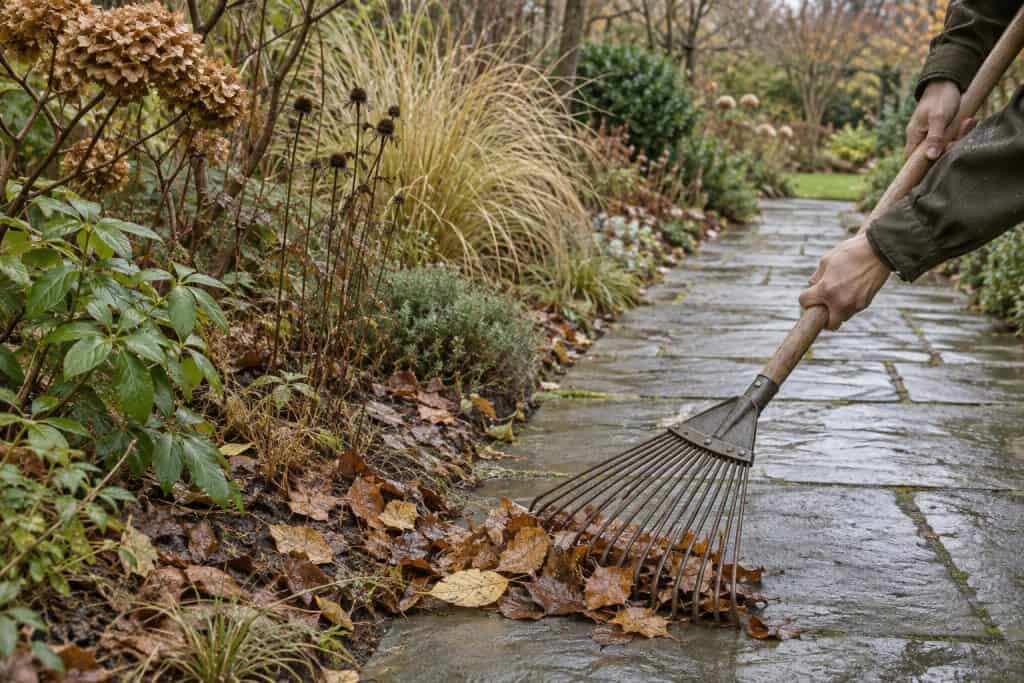
Fallen leaves: keep them, move them or make leaf mould
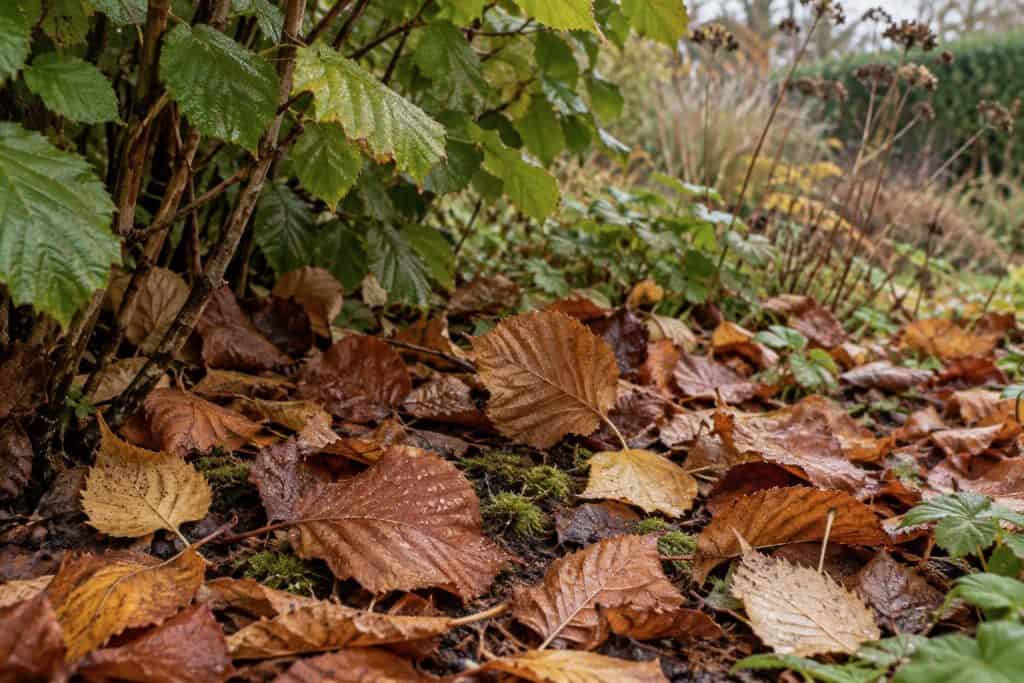
Fallen leaves are one of autumn’s most useful materials. Where they settle in borders, beneath shrubs or under hedges, they can be left to break down naturally. In these quieter places, leaf litter also offers shelter and feeding ground for small wildlife.
A thick, wet layer on a lawn is different. It can smother the grass beneath it, so rake or mow those leaves and put them to use elsewhere. Healthy leaves can be added to compost or gathered separately to make leaf mould, a useful soil conditioner that develops slowly over time.
Leaves do not need to be moved simply because they have fallen. Move them when they are in the way, forming a dense mat, or covering a surface that needs to remain safe and usable. Clear leaves from steps, paths and drains. If they are collecting in a pond, remove some before they sink and build up.
The aim is not a leaf-free garden. It is to put the leaves where they can do the most good.
Stems and seedheads: let the plant decide
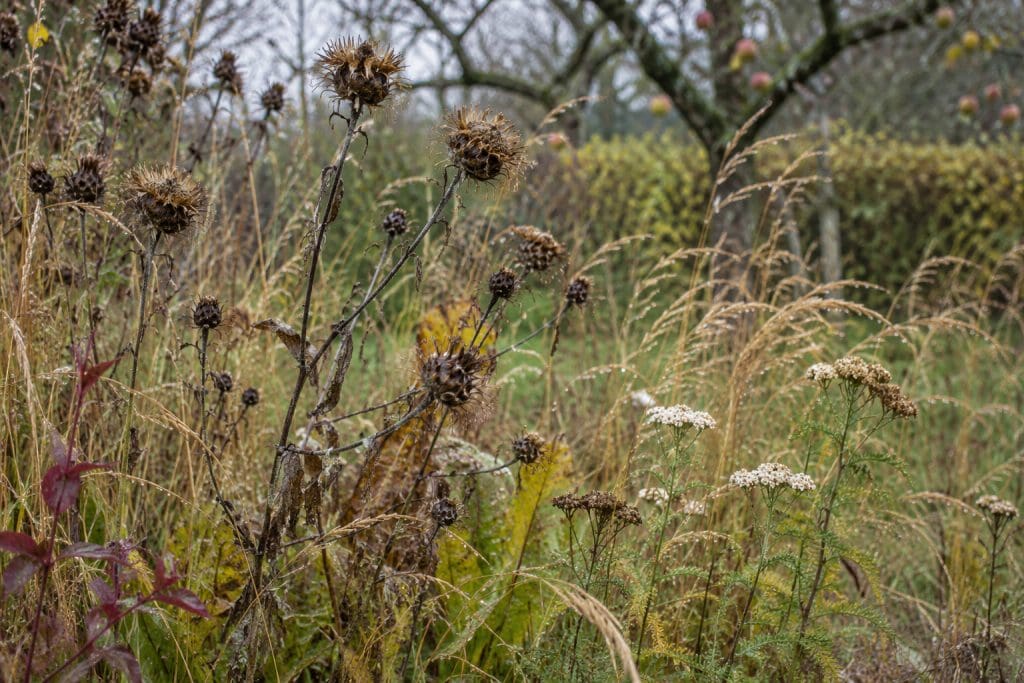
Many healthy stems and seedheads can remain through winter. They bring structure to a quieter garden and provide food or shelter for wildlife. In spring, they can be cut back when the garden begins to show new growth.
This does not mean every plant must be left standing. Consider the needs of the plant, the conditions in that part of the garden, and whether the stems obstruct a path or create another practical problem before starting your autumn garden cleanup. Leave a section of a border standing if you can, even if you need to cut back elsewhere.
For a closer look at the value of leaving seedheads, see the iGrowHort Field Guide, Why Leave Seedheads Standing.
Remove what could cause a problem
A lighter autumn tidy still has a place for careful removal. If a plant has clearly diseased leaves or stems, collect the affected material rather than leaving it beneath the plant. Disposal guidance can vary with the disease and local waste rules, so check what is recommended where you live.
The same care applies to plants known to spread aggressively in your area. If seedheads are ripe, avoid scattering them as you work, and follow local guidance for disposing of the material. Not every unfamiliar plant is an invasive one, though. Take time to identify it before removing it.
There is a difference between clearing with a purpose and clearing everything by default. Study the native plants of your region, learn about invasive plants and how to keep them in check.
Keep the parts of the garden you live in
Ecological care does not require a garden to become inaccessible or difficult to use. Paths, steps, entrances and drains may need regular clearing. A vegetable bed may need spent crops removed before it is prepared for the next season. A patch of lawn may need leaves lifted to protect the grass.
The useful question is: what needs to stay clear, and what can be allowed to stay?
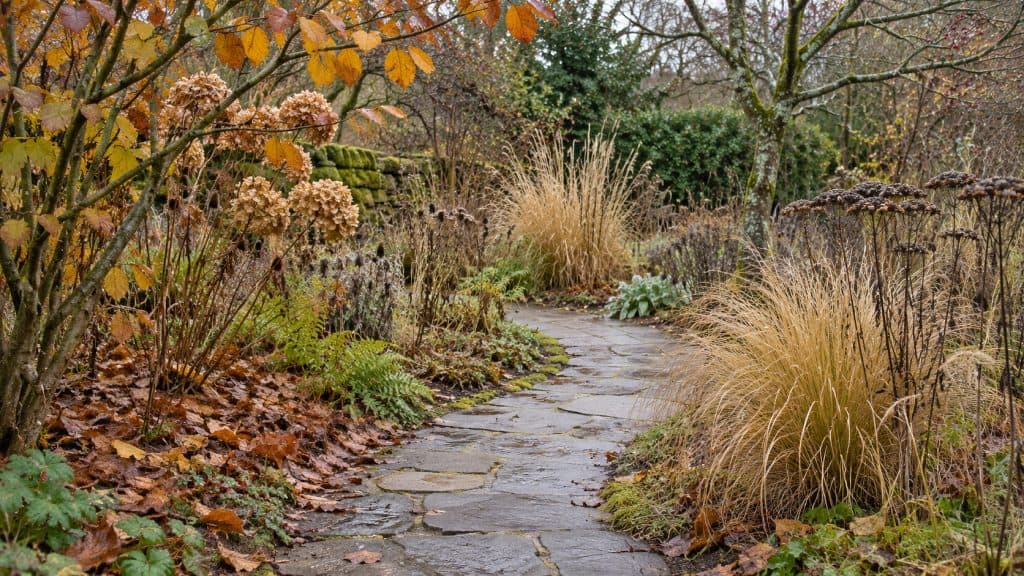
Once those practical areas are taken care of, the rest of the garden can be managed more selectively. A border can retain its stems. Leaves can rest beneath a hedge. A small pile of prunings can be placed in a quiet corner, in support of the garden and its wildlife.
A garden can look cared for without being cleared to bare soil.
A simple autumn walk-through
On your next visit, choose one area at a time. Ask:
- Are leaves forming a thick mat on grass, paths or drains?
- Can healthy leaves be left in a border or gathered for compost or leaf mould?
- Are there stems or seedheads that can remain through winter?
- Is any material clearly diseased or likely to spread unwanted seed?
- Which areas need to stay clear for access, safety or the garden’s everyday use?
There is no need to finish everything in one afternoon. As the garden changes, you can return and adjust your decisions.
Letting go is also a gardening practice
Autumn asks us to accept that a garden will not remain at its summer height. Flowers fade. Leaves fall. The outline of the place changes, and not all of that change needs correcting.
Some things must be removed. Some need to be moved. Much can be left to complete its own cycle.
That is a practical form of stewardship: noticing what the garden needs, acting where there is a reason, and allowing the rest to enter the season in its own way.
The garden is not being abandoned. It is being given room to rest, shelter life and prepare for what comes next.
References and further reading
- Royal Horticultural Society — How to create an autumn garden full of colour and wildlife
- Royal Horticultural Society — Leaf mould
- Royal Horticultural Society — Disposing of diseased plant material
- Royal Horticultural Society — Wildlife ponds and seasonal care
- University of Minnesota Extension — Nests for pollinators
- iGrowHort Field Guide — Why Leave Seedheads Standing